There is a particular kind of stillness that descends on Morocco in the hour before sunset during Ramadan, and if you have never experienced it, you are missing one of the most quietly powerful things this country offers. Visiting Morocco during Ramadan is not a compromise or a consolation prize. It is a different kind of travel entirely, and understanding what really shifts, and what stays exactly the same, will make the difference between a confusing trip and an extraordinary one.
What to expect in Morocco in ramadan: the honest picture
Morocco during the fasting month is fully operational, welcoming, and safe for tourists. The country does not shut down. What changes is the rhythm, and once you tune into it, everything becomes richer.
The most immediate difference is timing. Ramadan restaurant hours in Morocco shift significantly. Many local restaurants close during the day and reopen from iftar, the fast-breaking meal at sunset, through to the early hours of the morning. Hotels, riads, and tourist-facing establishments continue serving food throughout the day, so you will never struggle to find breakfast or lunch. But wandering into the old medina at midday expecting a packed street food scene is a different experience than it would be in July.
The streets are quieter in the afternoon. By late afternoon, the energy changes completely. Families gather, bread sellers appear, and the air carries the smell of harira soup and freshly fried sfenj. This is not a disruption to your itinerary. It is an invitation.
Morocco fasting month etiquette: what visitors should actually know
Respecting local customs during Ramadan requires very little effort and earns a great deal of goodwill. The core principle is simple: do not eat, drink, or smoke in public spaces in front of fasting locals during daylight hours.
This is not legally enforced for tourists, but it is deeply appreciated. Morocco fasting month etiquette is less about rules and more about awareness. If you want a coffee mid-morning, step inside your riad or a tourist café. Avoid eating a sandwich while walking through the souks. These are small adjustments that signal genuine respect.
Dress modestly, which applies year-round in Morocco but carries more weight during Ramadan. Shoulders and knees covered, particularly in the medina and near mosques. Greet people with the traditional Ramadan Mubarak or Ramadan Kareem and watch the warmth that follows.
- Avoid eating, drinking, or smoking on public streets during daylight hours.
- Dress conservatively, especially in residential neighbourhoods and around mosques.
- Keep your voice down in the hours just before iftar, when people are tired and focused.
- Accept an invitation to share iftar if one is offered. It is one of the rarest gifts a traveller can receive.
Morocco Ramadan Travel Tips for a Smooth Trip
Yes, Morocco is genuinely rewarding to visit during Ramadan, provided you travel with the right expectations and some cultural awareness.
The crowds that descend on Marrakech in peak spring and autumn thin out noticeably. Prices at riads and on private tours are often lower. The monuments, gardens, and souks feel less pressured. And the evening atmosphere, particularly around iftar in Marrakech, is something no guidebook has ever adequately described.
Jemaa el-Fna square transforms after sunset. The food stalls that are quiet all day suddenly ignite. Families are out late, children running between tables, the air full of music and conversation. The night belongs to everyone, and as a visitor, you are included in that. Morocco nightlife during the holy month is not clubs and bars; it is a city exhaling together after a long day of patience and prayer.
For travellers already curious about Morocco through the seasons, Ramadan represents one of the most texturally distinct windows in the entire calendar year.
The iftar experience in Marrakech: what happens at the table
Iftar begins the moment the Maghrib call to prayer sounds, and the transformation is immediate. One second the streets are tense with quiet anticipation, the next they are alive.
The traditional iftar spread includes harira, a thick tomato and lentil soup; dates, which are eaten first by tradition; chebakia, a sesame and honey pastry; and hard-boiled eggs. In a Moroccan household or a genuine local restaurant, this is not a snack before dinner. Iftar is the main meal, eaten slowly, shared across generations, and followed by tea and conversation that stretches well past midnight.
If you are staying in a family-run riad, ask whether they offer an iftar meal for guests. Many do, and the experience of sitting at a communal table as the call to prayer breaks the fast is something that stays with travellers for years.
Does a Sahara desert tour during ramadan still work?
A Sahara desert tour during Ramadan works very well, with a few practical adjustments worth knowing before you go.
Your guide and camel handlers may be fasting, and their energy levels in the late afternoon will reflect that. A good private operator plans around this naturally, scheduling dune climbs and sunset viewpoints so that the most physically demanding parts of the day happen in the cooler morning hours. Timing your desert activities around the fast is not complicated; it is just considerate planning.
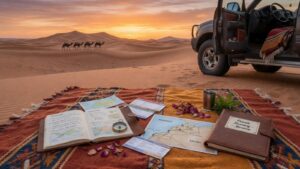
The Sahara itself is unchanged. The silence of Erg Chebbi at dawn does not observe Ramadan. The stars over Merzouga are no different. And sharing a fire and a meal at iftar with your guide in the desert is an experience entirely unlike anything you will find in a five-star lodge. A well-planned private guided tour during Ramadan accounts for all of these rhythms and turns them into highlights rather than obstacles.
How to plan your Morocco cultural customs experience during ramadan
Planning around Moroccan cultural customs during Ramadan means working with the country’s schedule rather than against it.
Here is how to approach your days:
- Start early. Mornings before noon are the calmest and coolest time to visit souks, gardens, and monuments. Locals who are fasting tend to conserve energy later in the day.
- Plan a long, slow lunch at your riad or a tourist restaurant. This is your quiet hour, not wasted time.
- Rest in the mid-afternoon. Morocco does the same. Use this time to read, nap, or sit in a courtyard.
- Be outside and on the streets as sunset approaches. This is when the city comes alive in a way that nothing else replicates.
- Eat iftar in a local restaurant if you can find one open to tourists. Arrive early because they fill up instantly after the call to prayer.
- Stay out late. The medina after iftar is safe, energised, and completely different from its daytime self.
Morocco cultural customs for tourists during Ramadan are not a barrier. They are a structure that, once understood, gives your entire trip a satisfying shape and pace.
Ramadan in Morocco is not a reason to hesitate. It is one of the most compelling reasons to come. The country reveals something of its interior life during this month, something that hurried high-season visitors rarely see. If you are already weighing your options and wondering when your trip will truly click, the guide to visiting Morocco through the seasons will help you understand exactly what each window of the year offers, and why Ramadan deserves serious consideration.