A layered identity: Arab, Berber, and beyond
Morocco’s population carries the weight of several thousand years of history, and that history shows up in faces, languages, surnames, and surnames, in the way people greet each other, and in what they cook on a Friday afternoon. The two dominant heritages are Amazigh (Berber) and Arab, but the story is considerably more nuanced than that simple divide suggests.
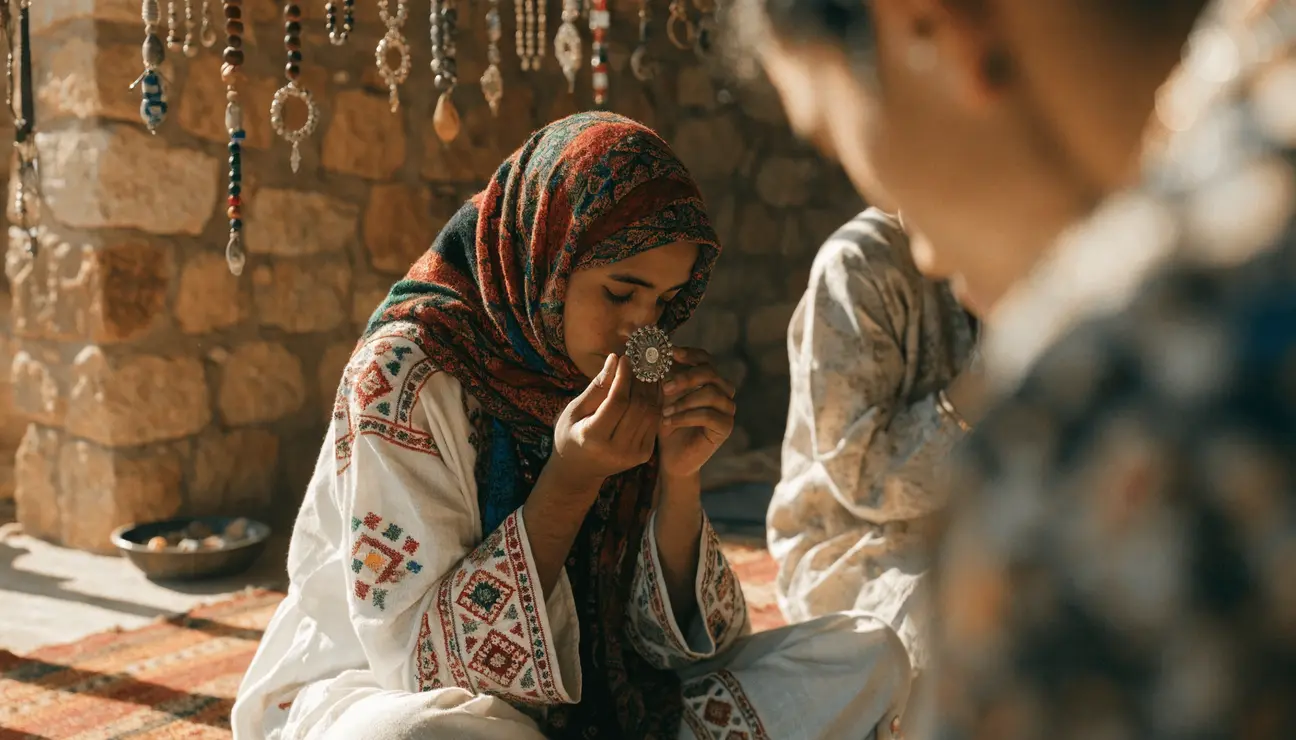
The Amazigh people are the original inhabitants of North Africa. Long before Arab armies arrived in the seventh century, Berber tribes had built kingdoms, traded across the Sahara, and developed their own language, Tamazight, which today holds official status alongside Arabic in Morocco’s constitution. In the Atlas Mountains and the deep south, you will still find communities where Tamazight is the first language, where women wear traditional silver jewellery passed down through generations, and where the rhythms of daily life have changed remarkably little over centuries.
Arab influence arrived with Islam and reshaped the country’s cities, its architecture, its intellectual life, and its social codes. Over generations, Arab and Berber identities blended so thoroughly in many families that the distinction became cultural rather than strictly ethnic. Most Moroccans today will tell you they are simply Moroccan, carrying both strands without feeling any contradiction between them.
There are also communities with Andalusian roots, descendants of Muslims and Jews who fled Spain after 1492 and brought with them music, cuisine, and architectural styles that still colour cities like Fes and Tetouan. Sub-Saharan African heritage, especially in the southern regions, adds another layer through the Gnawa people, whose spiritual music and cultural practices are recognised across the world. This layering of identities is what gives Moroccan culture and society its particular depth.
The Berber people of Morocco: mountain life and ancient traditions
The Berber people of Morocco represent a living continuity with the country’s deepest past. Roughly half of Morocco’s population identifies as Amazigh, either culturally or linguistically, and their presence is felt across the Rif Mountains, the Middle Atlas, the High Atlas, and the Souss Valley in the south.
Each region carries its own distinct tribal identity. The Chleuh Berbers of the High Atlas and Souss are known for their intricate carpet weaving, their decorated pottery, and the specific patterns of their silver jewellery. The Rifian Berbers of the north have their own dialect, their own music, and a fiercely independent character shaped by the rugged landscape they inhabit. The Ait Benhaddou region and the Draa Valley are associated with the Ait Atta confederation, semi-nomadic tribes who once controlled major trade routes through the Sahara.
Visiting Berber villages in the Atlas Mountains is one of the most honest ways to understand Moroccan people and culture. These are not staged experiences. Families live as they have for generations, farming terraced fields, raising animals, and gathering in the evenings around wood fires. If you are invited inside, you will likely be offered argan oil with bread and honey, a gesture of welcome that costs the family something and is given freely.
What does Moroccan hospitality actually look like in practice?
Moroccan hospitality is not a tourist attraction. It is a deeply ingrained social obligation rooted in Islamic tradition and centuries of desert culture, where receiving a stranger well was a matter of both honour and survival. The Arabic concept of “diyafa” refers to the duty of generosity toward guests, and it shapes interactions at every level of Moroccan society, from a rural farmer sharing his lunch to a Marrakchi family hosting you for a three-hour dinner you were not expecting.
Mint tea is the most visible expression of this ethic. Prepared with loose gunpowder green tea, fresh mint, and a generous quantity of sugar, it is poured from a height to create foam and served at least three times. Refusing the first glass is acceptable; refusing the second begins to feel like an insult. The ritual is about time, not thirst. It is an invitation to slow down and be present with another person.
Food is another primary language of welcome. In a Moroccan home, the table is never considered too full. Dishes are added rather than portioned out, and the expectation is that everyone eats until they are genuinely satisfied. Being invited to eat in a Moroccan home remains one of the most generous experiences this country offers.
If you want to experience local life in Morocco beyond the surface of tourist trails, travelling with a local guide makes an enormous difference. The right guide does not just translate language — they translate context, navigate social codes, and open doors that would otherwise stay closed to a foreign visitor moving independently.
Daily life, social customs, and what travellers often misread
Moroccan daily life moves to rhythms that can feel disorienting to visitors used to northern European or North American schedules. The day begins early, with the fajr call to prayer before dawn pulling some people out of bed and leaving others undisturbed. Souks and markets are busiest in the mornings and again in the late afternoon. The midday hours, especially in summer, belong to rest. Evenings are social, extending late into the night, particularly on weekends.
Friday holds particular weight as the day of congregational prayer, and many businesses close or reduce their hours around midday. The pace of the city shifts noticeably. Families gather, streets around mosques fill with men in djellabas, and the smell of couscous drifts from residential alleyways because Friday couscous is one of those traditions that has survived every generation.
Understanding a few social customs protects you from unintentional offence. Dressing modestly, particularly when visiting smaller towns, rural communities, or religious sites, is received with appreciation rather than indifference. Asking permission before photographing someone is not just politeness — it is genuine respect for a person’s dignity. Greeting with “As-salamu alaykum” before launching into any question or request signals awareness and earns a different quality of response than simply beginning with “Excuse me.”
The medinas of Fes, Marrakech, and Chefchaouen are often where travellers first encounter Moroccan street life, but they present a version of the country shaped heavily by commerce and tourism. The more authentic texture of people and traditions in Morocco reveals itself in smaller towns: Ouarzazate, Tafraout, Moulay Idriss, Ait Ben Haddou’s surrounding villages, or the Wednesday souk in Rissani, where local farmers and traders gather with no particular interest in foreign visitors.
How to engage respectfully with the communities you visit
Meaningful travel in Morocco is not about collecting experiences. It is about exchange, however brief. A few simple approaches change the quality of every interaction.
- Learn five words of Darija, the Moroccan Arabic dialect. Even a broken “shukran” (thank you) or “la bas” (how are you) changes how people receive you.
- Slow down in markets. Browsing without the intention to buy is fine, but engaging with a seller as a person, asking about their craft or their product, costs nothing and creates genuine connection.
- Accept tea when it is offered in a shop, even if you have no intention of buying. The offer is social, not transactional.
- Ask your guide to take you to a neighbourhood hammam, a weekly souk outside the main tourist centres, or a local café where the clientele is Moroccan. These are the spaces where Moroccan daily life and customs become legible.
The Arab and Berber heritage Morocco carries is not a museum exhibit. It is alive in the people you pass in the street, in the conversations at a café table, in the way a shopkeeper rearranges his goods at the end of the day. Engaging with it requires nothing more than attention and a willingness to be a guest rather than a spectator.
Travelling with intention through Morocco’s human landscape
Morocco rewards travellers who come curious rather than scheduled. The country’s physical beauty is considerable, but it is the encounters with Moroccan people that consistently reshape how visitors understand themselves and the world. A conversation about life in the mountains, a shared meal in a riad courtyard, an afternoon spent watching artisans work in a medina workshop — these are the moments that accumulate into something more than a holiday.
At Merry Morocco, our private tours are designed around exactly this kind of travel. Our guides are Moroccan, deeply connected to the communities they introduce you to, and genuinely invested in making your experience feel like a real encounter with the country rather than a managed performance. Whether you are exploring the Atlas Mountains, tracing ancient trade routes through the south, or spending a week moving between Fes and Marrakech, we build in the spaces and the introductions that make human connection possible.
The people of Morocco are the country’s greatest gift to the traveller who pays attention. If you are ready to experience that for yourself, explore our private tours across Morocco and let us introduce you to the country through the people who know it best.