Every year, thousands of Americans land in Marrakech with a mix of excitement and quiet anxiety. They have questions before they go: Morocco safe for Americans? Will my passport cause problems? What are the real morocco travel safety tips nobody tells you before you book? This article answers all of that directly, without sugarcoating and without unnecessary alarm.
What does the us state department actually say about Morocco?
The US State Department Morocco advisory currently places Morocco at Level 1: Exercise Normal Precautions. This is the lowest advisory level, the same rating given to countries like France, Germany, and Japan. That context matters.
Level 1 does not mean risk-free. It means that Morocco presents no elevated threat specific to American travellers compared to most Western destinations. The advisory does recommend being alert in crowded areas and monitoring local news, which is reasonable advice anywhere in the world.
The State Department also notes that Morocco maintains strong counterterrorism cooperation with the United States. The two countries have a long-standing security partnership, which contributes to the stability most visitors experience on the ground.
American passport Morocco entry requirements: what you need to know before you fly
American passport holders do not need a visa to enter Morocco. US citizens can enter Morocco visa-free for stays of up to 90 days, which covers the vast majority of tourist itineraries. Your passport must be valid for at least six months beyond your entry date.
At the port of entry, you will complete a landing card and pass through standard immigration. Border officers are professional and the process is straightforward. There are no documented patterns of Americans being refused entry or singled out for additional screening based on nationality.
One practical note: keep a digital copy of your passport stored securely in your email or a cloud service. If your physical document is lost or stolen, the nearest US consulate can assist, and having that copy speeds the process considerably.
Is Morocco friendly to us tourists on the street?
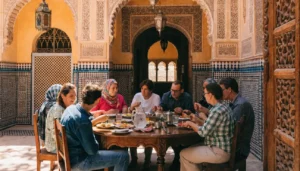
Morocco is genuinely welcoming to American visitors. Moroccans are known for hospitality, and Americans are received warmly across the country, from the medina streets of Fes to the mountain roads of the Atlas. Most interactions you will have with locals are generous, curious, and good-humoured.
That said, understanding the local dynamic in tourist-heavy areas will make your experience significantly more comfortable. Unsolicited guides, persistent shopkeepers, and confident strangers offering to show you around are part of the landscape in places like Jemaa el-Fna square in Marrakech. This is not hostility. It is commerce. A firm, calm “no thank you” is always sufficient.
Learning a few words of Darija, the Moroccan Arabic dialect, goes a long way. Even a simple “shukran” (thank you) is met with visible appreciation and often opens conversations that are entirely genuine.
Morocco scams to avoid and petty theft in the medina
The most common issues facing tourists in Morocco are low-level scams and opportunistic petty theft, not violence or organised crime. Awareness is your primary defence.
Common situations to know about:
- Unofficial guides offering to lead you to a restaurant or shop, then expecting a commission from the business paid indirectly through inflated prices you pay.
- Someone placing an item in your hands, such as a plant, a scarf, or a small animal for a photo, then demanding payment.
- Aggressive price inflation in souks when sellers identify a tourist who has not asked the price before handling goods.
- Petty theft in the medina in Marrakech is a reality, particularly in dense, crowded areas. Keep your phone in a front pocket or bag with a zip, and do not display expensive cameras on a loose strap.
None of these situations are unique to Morocco. Versions of all of them exist in Rome, Istanbul, and Bangkok. The difference is that in Morocco, knowing what to expect visiting North Africa before you arrive removes almost all of the friction.
What are the real solo travel Morocco risks for americans?
Solo travel in Morocco is manageable and rewarding, but it requires more preparation than solo travel in Western Europe. The risks are not dramatic. They are logistical and social, and they are largely solved by planning.
For solo travellers, the practical considerations are:
- Navigation in old medinas is genuinely disorienting. Download offline maps before entering, or use a reputable guide for your first day in each city.
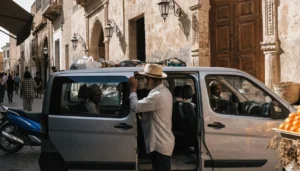
- Unmarked taxis and unofficial transport carry a higher risk of overcharging. Use grand taxis with agreed prices, or app-based services where available in major cities.
- Travelling between cities overnight by public bus carries a slightly higher risk of theft from luggage compartments. Keep valuables in your carry-on.
- In rural areas, English is less commonly spoken. A phrasebook or translation app is not optional, it is practical.
A morocco private guided tour security arrangement removes most of these variables entirely. When your transport, accommodation, and routes are pre-arranged through a vetted operator, the cognitive load drops and the experience opens up.
Women traveling alone in Morocco: an honest picture
Women can and do travel alone in Morocco safely, but they will likely experience more unsolicited attention than male travellers. Verbal comments in tourist areas are common. They are rarely threatening, but they can feel relentless on a bad day.
Practical steps that make a meaningful difference:
- Dress modestly in medinas and rural areas. Covered shoulders and loose trousers are comfortable in the heat and reduce unwanted attention significantly.
- Walk with purpose. Hesitation in a narrow alley invites approaches from people offering to help, with or without an agenda.
- Stay in well-reviewed riads with staff. A good riad owner is an invaluable source of real-time local advice.
- Book your first and last transfers in advance. Arriving and departing alone in an unfamiliar city at unusual hours is where most avoidable stress concentrates.
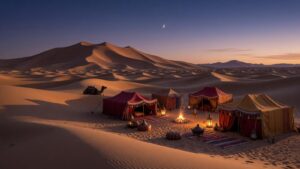
Many women travelling solo in Morocco report that the country rewards those who engage on their own terms. The discomfort of unwanted attention in the souks is real. So is the kindness of a family who invites you to share tea, the calm of a desert sunrise at Erg Chebbi, and the pride locals take in showing their country to visitors who are genuinely curious about it.
How a private guided tour changes the safety equation
Travelling Morocco with a private guide fundamentally shifts the experience from one where you are managing risk to one where you are simply travelling. A knowledgeable local guide handles navigation, negotiates on your behalf in markets, explains cultural context in real time, and creates a buffer between you and the situations that cause stress for first-time visitors.
This is not about being shielded from Morocco. It is about having access to it on a deeper level. A guide who has lived in Fes for thirty years knows which stalls in the Attarine souk are worth your time, which routes avoid the worst of the tourist density, and how to introduce you to the kind of experience you will not find by following a generic map pin.
For Americans planning their first visit, the combination of pre-arranged logistics and expert local guidance removes the uncertainty that sits underneath most safety concerns. The country itself is not the source of risk. The unknown is. And a good guide eliminates the unknown.
Morocco rewards preparation and presence in equal measure. The travellers who arrive informed, remain observant, and choose their support wisely almost universally leave wanting to return. If you are planning your first trip and want to understand exactly what to expect from arrival to the final night, our guide to travelling from the USA to Morocco for the first time walks through everything you need to know before you land.