What the Sahara actually looks like around Merzouga
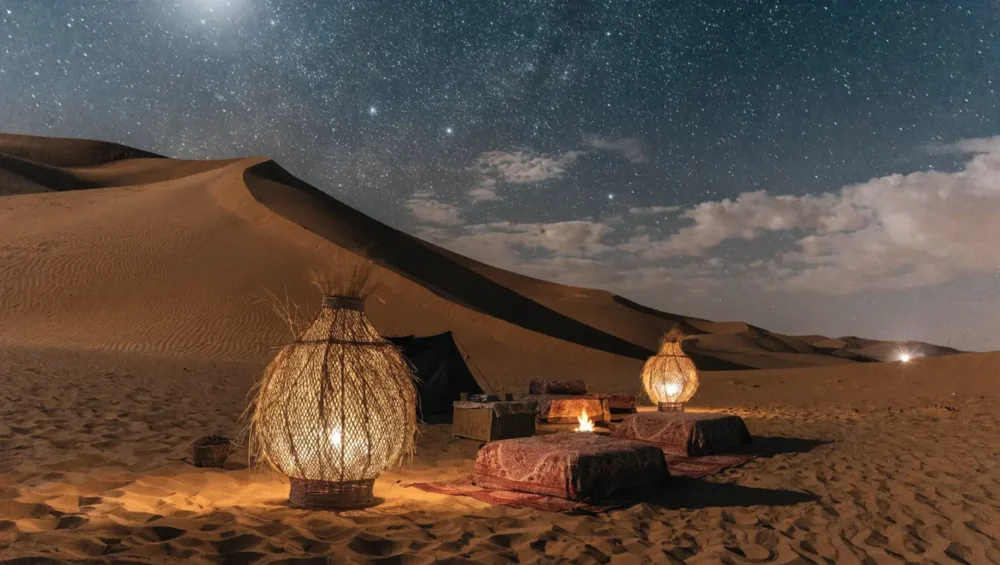
The Sahara is not a single landscape. Morocco’s section of it, centred around Merzouga in the southeast of the country, is defined by the Erg Chebbi dune field, a sea of golden and terracotta sand that rises to over 150 metres in places. These are not gentle hills. They are dramatic, sculpted formations that shift shape with the wind and change colour completely depending on the hour of day.
The light at dawn and dusk in the Erg Chebbi dunes is unlike anything found in Europe or North America. Photographers come specifically for these few minutes when the dunes glow deep amber and the shadows fall in long, clean lines. Even if you have seen desert landscapes in photographs before, arriving in person tends to surprise people. The scale feels different when you are standing inside it.
The surrounding area includes a village, a small lake that appears seasonally, and a fringe of palm trees along the edge of the dunes. Merzouga itself is a quiet town built around the tourism that the dunes generate, and it serves as the gateway for nearly every sahara desert overnight camp morocco experience available in the country.
How a typical desert camp night unfolds
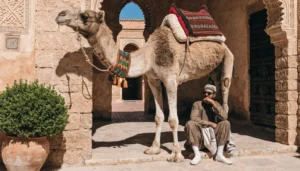
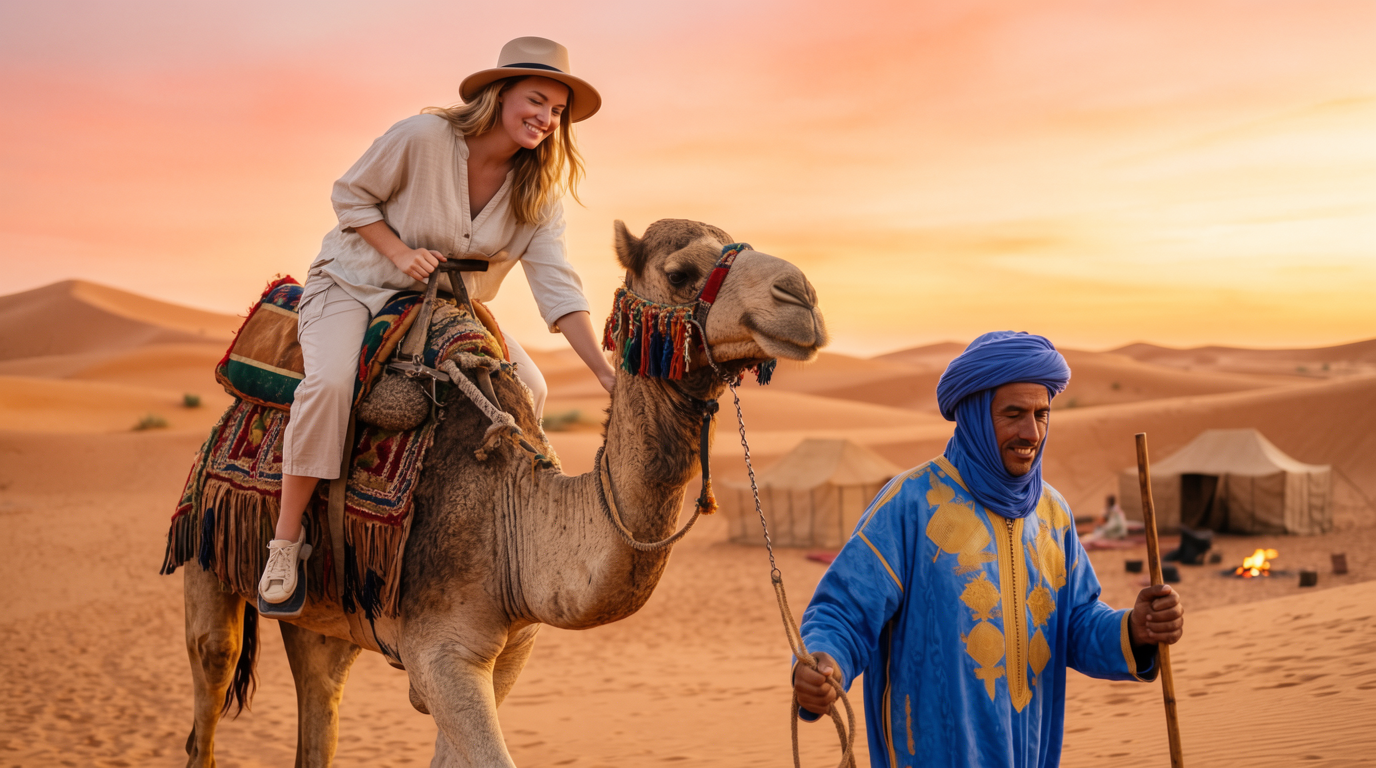
Most Merzouga desert camp tours begin in the late afternoon, when the heat has softened and the light has turned warm. You mount a camel at the edge of the dunes and begin a slow, rocking journey into the interior. The camel trek itself usually lasts between forty-five minutes and an hour and a half, depending on how far into the dunes your camp is positioned. Guides lead the caravan on foot, and the pace is calm enough to take photographs along the way.
Arriving at camp as the sun sets is a deliberate part of the experience. You watch the dunes change colour in real time as you settle in, and by the time dinner is being prepared, the stars are already appearing. The milky way becomes visible in its entirety once the moon is low or absent, and on clear nights the density of stars overhead is genuinely disorienting at first.
Dinner at a desert camp is typically a Moroccan affair: tagine, couscous, fresh bread baked over coals, mint tea poured from height into small glasses. After eating, many camps offer live music, with a drummer and singer performing traditional Berber songs beside the fire. It is not a performance in the polished sense; it is simply how people in this region spend evenings. The atmosphere is relaxed rather than theatrical.
What happens in the morning
Most guests wake before sunrise to climb the nearest high dune and watch the light return. Guides are available to help with the climb, which takes anywhere from fifteen to forty minutes depending on the dune and your pace. The view from the top, with the camp below and hundreds of square kilometres of sand in every direction, is the image that tends to stay with people longest.
Breakfast is served back at camp before the camel ride returns you to the edge of the dunes. The full experience, from leaving Merzouga to returning the following morning, fits comfortably into an overnight excursion without needing more than one night away from your main itinerary.
Choosing between luxury and standard camps
The range of accommodation options in the Erg Chebbi area has expanded significantly over the past decade. At one end, you have basic bivouac camps with simple Berber tents, shared facilities, and a stripped-back approach that prioritises the landscape over comfort. At the other end, luxury desert camp Merzouga options now include private ensuite tents, proper beds with linens, solar-powered lighting, and even hot showers.
Desert glamping in Morocco has become a genuine category of its own. These higher-end camps are architecturally considered, with tent interiors that feel closer to a boutique hotel room than a camping trip. They suit travellers who want the dune experience without sacrificing sleep quality or hygiene standards. For families with young children, honeymooners, or anyone who simply prefers not to roughen it, a luxury camp is a sensible and still deeply atmospheric choice.
Standard camps, on the other hand, offer something that luxury versions sometimes dilute: a rawer sense of place. Sleeping closer to the ground, with fewer buffers between you and the desert, creates a more immediate connection to the environment. Neither option is objectively superior. The choice depends entirely on what you want to take away from the experience.
If you are still in the planning stages of a broader Moroccan itinerary, our merzouga desert camp tour options are designed to be built into a multi-day private journey across the country, combining the desert with the Atlas Mountains, the kasbahs of the Draa Valley, and a return through landscapes that feel entirely different from the dunes you started in. Travelling this route with a private guide changes the experience considerably.
What to bring and how to prepare
The desert requires a small amount of practical preparation, but nothing that should cause anxiety. Temperatures in the Sahara swing dramatically between day and night, and the difference can catch people off guard. Summer days can be intensely hot, while nights at higher elevations of the dunes are often cooler than expected regardless of the season. A light layer for sleeping is worth packing even in July.
Here is what experienced travellers consistently recommend bringing:
- A headlamp or small torch, since most camps have limited lighting away from the central area
- Sunscreen and a scarf or shemagh to wrap around your face during windy crossings
- Closed shoes or sandals with straps for walking on sand, rather than flip-flops
- A power bank, as charging points are limited or absent at basic camps
- Any personal medication, since the nearest pharmacy is back in Merzouga town
Most camps provide blankets, pillows, and basic toiletries. If you are booking through a tour operator, confirm in advance what is included so there are no surprises on arrival. Bringing too much luggage is usually unnecessary; a small overnight bag is sufficient for a single night in the dunes.
Is sleeping under the Sahara stars worth the journey?
Sleeping under stars in the Sahara in Morocco is the kind of question that answers itself once you are there. The journey from Marrakech to Merzouga takes approximately eight to ten hours by road, passing through the High Atlas Mountains and the palm-lined valleys of the south. It is a long day of travel, but the landscape changes so dramatically throughout that most travellers find the drive itself rewarding.
The experience of a camel trek and camping in Morocco is not simply about ticking off an activity. People who do it tend to describe it as a reset: a night without screens, without noise, without the texture of ordinary life pressing in. There is a quality of stillness in the deep desert that is difficult to access elsewhere, and that stillness tends to be the detail people mention most when they return.
The best desert camps in morocco are not simply places to sleep; they are the frame through which the entire desert experience is understood. Choosing the right camp, the right route, and the right timing within your itinerary makes the difference between a night that was interesting and a night you genuinely carry with you.
Planning your desert trip with Merry Morocco
A night in the Erg Chebbi dunes works well as a standalone excursion from Merzouga, but it reaches its full potential when integrated into a longer private journey through Morocco’s south. Combining the desert with Aït Benhaddou, the Todra Gorge, the cedar forests of Azrou, or a final evening in a riad in Fes creates a journey with real depth and variety rather than a single highlight surrounded by transit time.
Merry Morocco designs private itineraries around the way you actually want to travel, not around fixed departures or group schedules. Whether you are looking for a two-night desert extension or a full ten-day circuit through the south, every detail is arranged in advance so that you arrive at the dunes knowing exactly what to expect and can focus entirely on being there.
Camping in Morocco’s desert is one of those experiences that resists being adequately described before you have done it. But that is precisely why it is worth doing. Explore how Merry Morocco can build your southern journey around a night in the Sahara by visiting our Merzouga travel guide and starting from there.