The Erg Chebbi Dunes: What Makes Them So Extraordinary
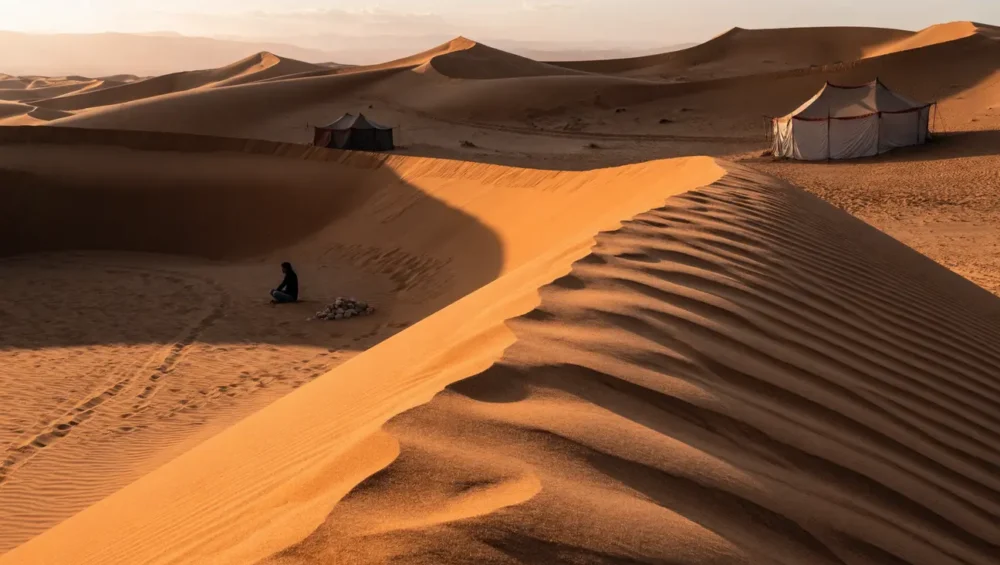
The Erg Chebbi dunes rise without warning from a flat hammada plain, peaking at around 150 meters some of the tallest dunes in all of North Africa. The color shifts throughout the day from pale gold in the morning to a deep amber-orange at dusk, and by late afternoon the shadows carve the ridgelines into something that looks almost theatrical. The scale of it takes a moment to absorb. Standing at the base, the silence is immediate and total.
What most people do not realize until they get here is how the dunes change completely depending on the hour. We always tell travelers: if you see the dunes only in the middle of the day, you have barely seen them at all. The real Erg Chebbi belongs to the early morning and the last hour before sunset. The light does things to the sand that no photograph fully captures.
Summer temperatures in Merzouga regularly exceed 40°C, so plan your outdoor time around the cooler hours early morning and late afternoon are non-negotiable during July and August. Spring and autumn, when daytime temperatures hover around 25–30°C, are the most comfortable seasons to visit. Nights in the desert drop sharply regardless of season, sometimes by 15 to 20 degrees, so pack a proper layer even if you arrive in warm weather.
What to Do in Merzouga Beyond the Famous Dunes
The dunes are why people come. But the Merzouga region offers a range of Merzouga desert activities that most visitors never discover because they stay too close to the main tourist area. Spend an extra day or two and the experience opens up considerably.
Camel Trekking Into the Sahara
A Merzouga camel trek is one of those experiences that feels clichéd until you are actually doing it swaying above the sand at dusk, watching the shadows lengthen, with nothing between you and the horizon. Most treks depart late afternoon and take one to two hours to reach the overnight camp. The camel handlers here are mostly from local Berber families who have worked this route for generations. Our drivers who cover the Merzouga route know these families personally, which means the camps we use are genuine setups, not the overcrowded tourist villages closer to the road.
For the overnight experience, the sky is the real reward. At an altitude of around 900 meters above sea level with zero light pollution, the Milky Way is visible with the naked eye on clear nights. Bring a sleeping bag rated for cool temperatures even in summer, and do not expect to sleep too much the silence and the stars will keep you awake.
Sandboarding the High Dunes
Sandboarding in Merzouga is rougher and more physical than people expect, and that is precisely what makes it memorable. You climb which is genuinely tiring in loose sand and then you descend fast on a wooden board while fighting to keep your balance. Most guests at Merry Morocco who try it once immediately want to go again. No previous experience is needed, but good shoes matter; sand gets into everything.
Visiting the Nomad Villages Near Merzouga
A few kilometers from the main dune area, small communities of semi-nomadic Berber families still live in a way that has changed very little over decades. A Merzouga nomad village visit arranged through a local guide not a self-organized wander is an entirely different experience. You sit in a proper tent, drink mint tea brewed over a gas flame on a carpet-covered floor, and talk through a guide who actually knows the family. The hospitality is genuine and the conversation often goes somewhere unexpected.
One detail that only becomes obvious once you are there: many of these families keep goats, dromedaries, and occasionally silver-colored fennec foxes the latter being an unofficial mascot of the Merzouga area. If you are lucky enough to see one in the wild at dusk, you will understand why they appear on every souvenir in town.
How Do You Watch the Sunrise Over the Dunes in Merzouga?
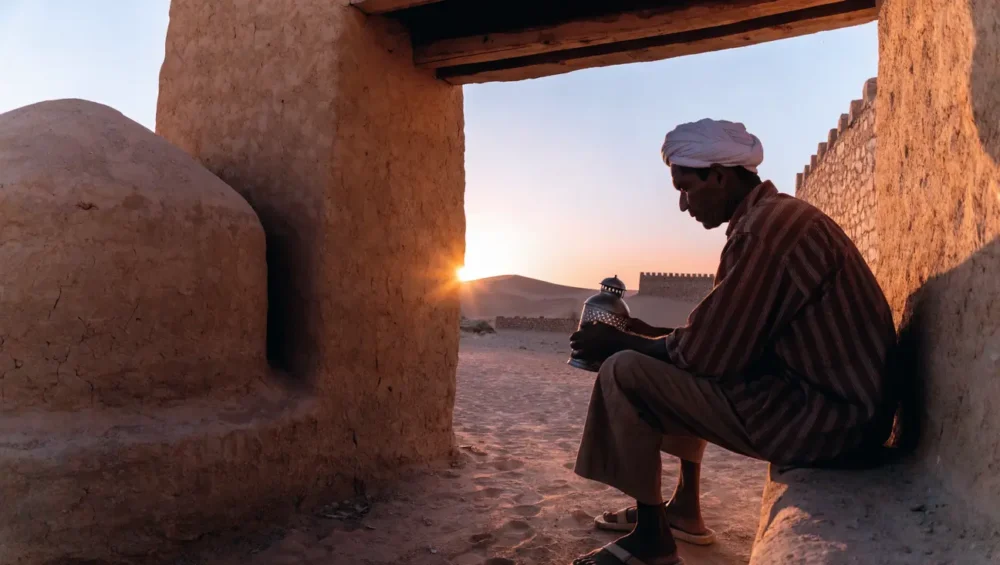
The most direct answer: wake up before 5 a.m., climb to a high dune ridge with a guide, face east, and wait. The Merzouga sunrise over the dunes is not something you can observe from a hotel window and consider done. The light builds gradually pale grey first, then pink, then a sudden warmth that floods the sand in orange and turns the entire landscape into something almost dreamlike. The whole process takes about thirty minutes from first light to full sun, and every minute of it is worth the early alarm.
If you are staying overnight in a desert camp, the guide will typically wake you in time without any need to set alarms yourself. If you are based in a hotel in Merzouga village, a short drive or a thirty-minute camel ride in the dark will get you to the right position before dawn. We always recommend the in-dunes overnight stay for first-time visitors because the morning belongs to those who slept there no traffic, no latecomers, just the light and the sand.
What Are the Best Merzouga Attractions Outside the Dune Area?
Merzouga has more Merzouga attractions than most itineraries give it credit for. The Dayet Srij salt lake, located just north of the village, is a seasonal flamingo habitat during late winter and spring, large flocks of pink flamingos rest here on their migration routes. Seeing flamingos in the middle of the Saharan desert is one of those surreal Morocco moments that travelers genuinely struggle to explain to people back home.
The fossil sites around Erfoud, about 50 km north of Merzouga, are also well worth a half-day detour. The region sits on ancient seabed geology, and the fossilized trilobites and ammonites embedded in polished black marble are extraordinary both as geological curiosities and as locally crafted objects. Many of the artisan workshops near Erfoud will show you the cutting and polishing process if you ask.
For those interested in music, the Gnawa musicians of the Khamlia village, a small community about 7 km from Merzouga center, perform traditional trance music that is unlike anything else in Morocco. The village is mostly populated by descendants of sub-Saharan communities brought to the region centuries ago, and their musical tradition low drumming, iron castanets called krakeb, and deep call-and-response vocals is recognized by UNESCO. Stopping here for a live session is one of the most unexpectedly moving things you can do in the entire region.
Planning Your Time: How Long to Stay in Merzouga
Two nights is the minimum that allows you to do Merzouga properly. One night is enough to see the sunset, sleep in the desert, and watch the sunrise but it leaves no room for anything else. With two nights, you can add a nomad village visit, a morning of sandboarding, and a drive out to Khamlia or the salt lake. Three nights, while unusual, gives the whole experience a different quality: the pressure disappears, the desert slows you down in the best possible way, and you start noticing smaller things.
Most travelers we work with at Merry Morocco combine Merzouga with a longer Morocco road trip arriving via the Draa Valley or the Todra Gorge from the north, then continuing west toward Ouarzazate and eventually Marrakech. The drive from Marrakech to Merzouga takes roughly nine to ten hours depending on the route and stops, which is exactly the kind of journey where having a knowledgeable driver makes the difference between a transfer and an actual experience.
If you are planning a desert trip and want someone local to handle the logistics the desert camp selection, the camel arrangements, the village visits Merry Morocco, based in Marrakech, specializes in exactly this kind of private, tailor-made desert itinerary. The difference between booking something generic online and traveling with people who know the region firsthand is difficult to overstate.
Final Thoughts on Merzouga
Merzouga rewards the curious and the patient. The dunes are undeniably spectacular, but the deeper pleasures a Gnawa drum session at a desert lake, mint tea with a nomadic family under a wool tent take a little more intention to find. Come with time, come with an open schedule, and let the desert set the pace. You will leave understanding why travelers who visit once almost always start planning a return.