Why Morocco is one of the most photographed countries in the world
Morocco offers a rare concentration of visual contrasts within a relatively compact geography. Within a single week, a photographer can move from the rose-tinted walls of Marrakech’s medina to snowcapped Atlas peaks, through palmeries and gorges, and out into the open Sahara. Few countries compress that range of scenery, architecture, and human life into such accessible distances.
The quality of natural light here is genuinely exceptional. The country sits at a latitude where the sun travels at an angle that produces long, warm golden hours in both morning and evening. Dust and dry air scatter light softly across landscapes and facades, reducing harsh shadows even at midday in certain seasons. For morocco landscape photography, this means dramatic skies, rich colours, and textures that photograph exactly as they appear to the eye.
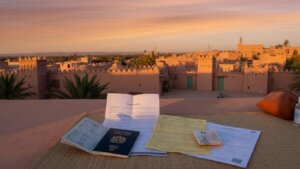
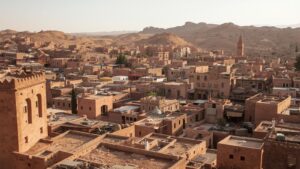
The architecture adds another layer entirely. Riads with internal courtyards filter light into geometric pools. Kasbahs built from pisé, the traditional compressed earth construction, glow amber at sunset. Ancient medersas, covered souks, and tiled fountains provide infinite compositional opportunities for anyone drawn to architectural or documentary photography.
What does a morocco photography tour actually look like?
A well-structured morocco photography tour differs from a standard sightseeing trip in one fundamental way: it is built around the light, not the itinerary. Departure times are chosen to catch sunrise at specific locations. Routes are planned to avoid shooting into the midday sun. Afternoons may be reserved for medina walks where shade, shadow play, and intimate street scenes replace the wide-open landscapes of the morning.
A private photography tour in Morocco gives you complete control over your pace. You stop when something catches your eye. You return to a location a second time when the clouds shift. You linger in a pottery workshop or a spice market because the scene is worth it, not because a group is waiting.
Most photography-focused itineraries combine a base in Marrakech with excursions south through the Atlas Mountains and into the desert. Some photographers prefer to spend the majority of their time in the south, using Ouarzazate or Merzouga as a base. Others build their trip around the northern cities of Fes, Chefchaouen, and Meknes, which offer a completely different visual register.
How many days do you need for a proper photography journey?
A meaningful photography circuit of Morocco requires at least seven to ten days. A shorter trip of three to four days can be productive if focused on a single region, such as Marrakech and the immediate south. A full two-week journey allows you to combine the imperial cities, the Atlas, the desert, and the Atlantic or Mediterranean coastline without feeling rushed at any single location.
Best places to photograph in Morocco: a regional guide
Understanding the visual character of each region helps you match your interests to the right itinerary. Morocco is large enough that no single trip can cover everything with depth, so it pays to choose deliberately.
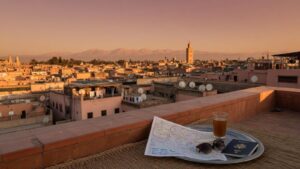
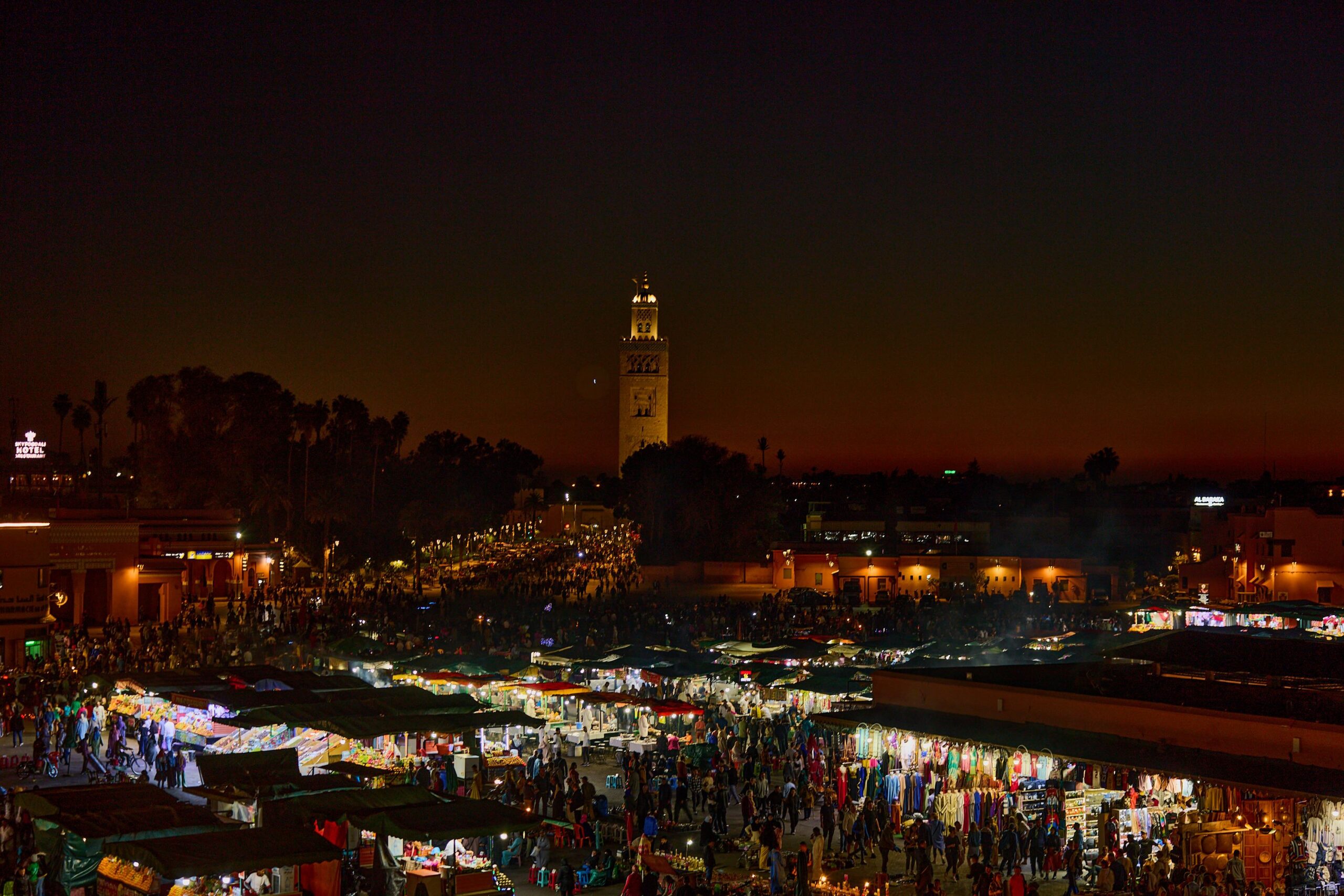
Marrakech rewards street photographers above all. The medina is a living scene of craftsmen, traders, schoolchildren, and daily ritual. The Mellah quarter, the tanneries district, and the lesser-known souks beyond Djemaa el-Fna offer intimate compositions that feel timeless. A photo tour Marrakech guide who lives in the city will know which doorways catch the morning light, and which rooftop terraces overlook courtyards the tourist trail never reaches.
The Atlas Mountains draw photographers for their landscapes and their Berber villages. The valleys around Ourika and Aït Benhaddou offer a softer, pastoral quality, while the higher passes through Tizi n’Tichka deliver dramatic alpine perspectives. Morocco atlas mountains photography is particularly rewarding in late autumn and early spring, when the peaks carry snow and the valleys are still green.
For morocco desert photography tour experiences, the Draa Valley and the dunes of Merzouga are the primary destinations. The Erg Chebbi dune field near Merzouga rises to roughly 150 metres at its highest point, and the play of wind-sculpted ridgelines against pre-dawn or post-sunset skies produces images that require very little editing. The desert is most comfortable photographically in the cooler months, roughly October through March.
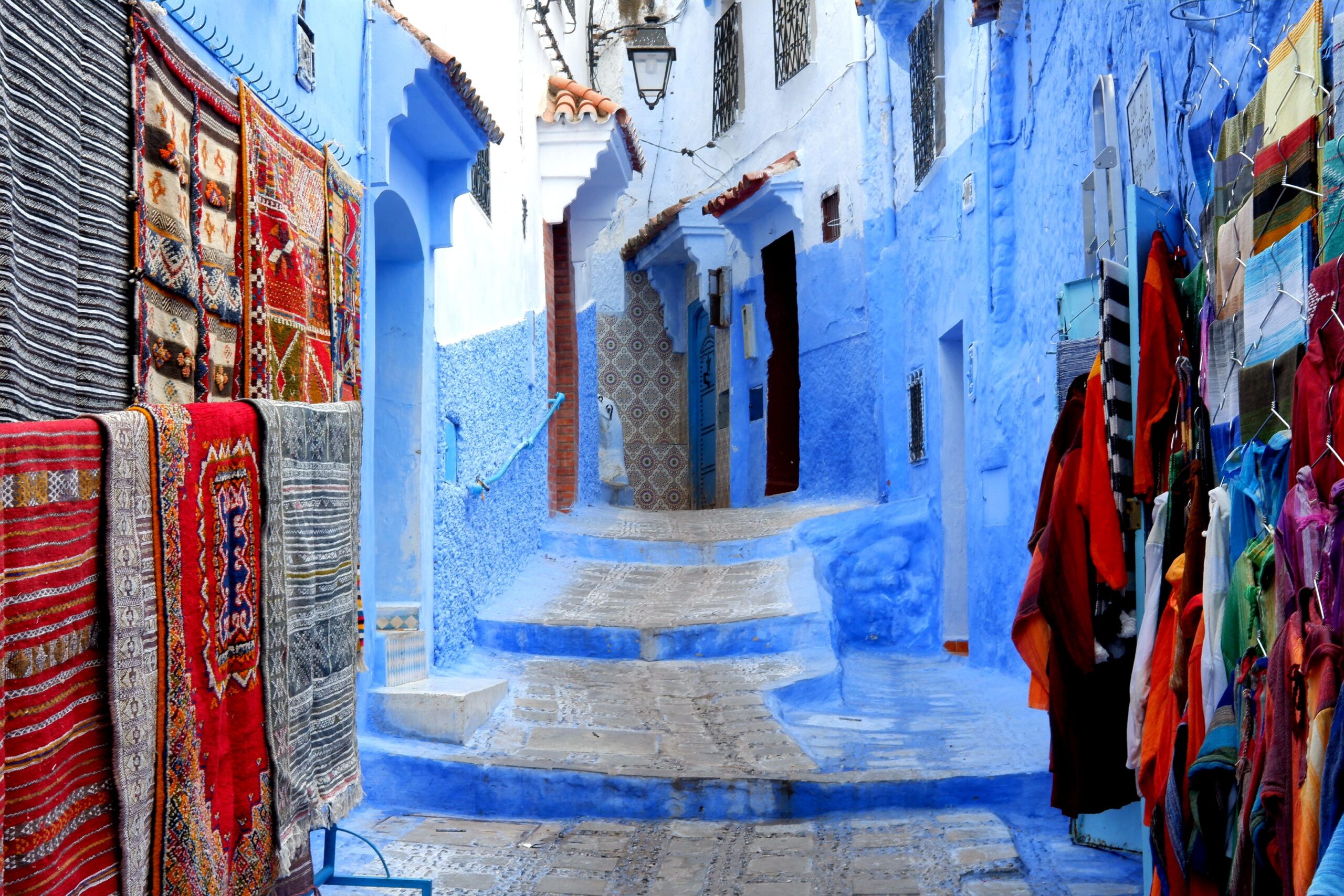
Chefchaouen, in the Rif Mountains, remains one of Morocco’s most consistently photographed towns. Its blue-washed medina is genuinely beautiful, but its character is most visible early in the morning before the streets fill. A guide who can take you there at the right hour makes the difference between a postcard image and a real photograph.
Morocco street photography: the ethics and the approach
Street photography in Morocco is rewarding, but it requires sensitivity. Moroccan people are, on the whole, warm and open to visitors, but candid photography in intimate spaces can feel intrusive without the right approach. Working with a local guide changes this dynamic entirely. A guide who is known in a neighbourhood, who speaks Darija and understands local customs, opens doors that a solo photographer with a camera would find firmly closed.
The medinas are not photography obstacles. They are places where people live and work. The most resonant images come from a place of genuine connection, however brief, not from a telephoto lens aimed across a square. Taking a moment to greet someone, to show interest in their craft, to ask permission with a smile, consistently produces better photographs than any technical shortcut.
If your interest lies in documentary-style work, a Morocco photo workshop format may suit you better than a purely sightseeing approach. Workshop-style tours include time for editing, discussion of technique, and the chance to revisit and refine specific locations over consecutive days.
Planning your photography excursion in Morocco
The practical side of a photography excursion in Morocco involves a few decisions that will shape your entire experience. Transport is the first. Morocco’s photographic highlights are spread across a large area, and the most efficient way to reach them, particularly in the south, is with a private driver. A knowledgeable driver who understands that you may want to stop unexpectedly at a roadside ksar or a goat herd crossing the road is an asset that no rental car can replace.
Timing your trip around specific events adds another layer of opportunity. The rose harvest in the Dadès Valley occurs in late April and early May. The Moussem of Tan-Tan and various other regional festivals take place on a calendar that shifts with the Islamic lunar year. Your guide can help you align your itinerary with events that are genuinely worth photographing, not simply staged for tourism.
Accommodation choices matter too. A riad in the heart of a medina gives you immediate access to early morning light before the streets fill. A desert camp in the dunes puts sunrise over the Sahara within walking distance of where you sleep. Building your logistics around your photography goals, rather than adjusting your photography around pre-booked logistics, is the philosophy that separates a good trip from a memorable one.
If you are ready to build an itinerary that puts your camera first, Merry Morocco designs private desert tours from Marrakech that can be tailored around photography priorities, your preferred pace, and the regions that speak to your visual interests. Reach out and we will help you design a journey around the images you want to bring home.
What to bring and how to prepare
Morocco’s diverse terrain means diverse conditions. Dust is a consistent challenge in the south and should influence how you store and clean your equipment. A good UV filter and a microfibre cloth are more useful than any exotic piece of kit. Wide-angle lenses perform particularly well in the souks and riads, where proximity and tight framing define the shot. A long zoom earns its weight in the mountains and in open desert landscapes where you want to compress distance between dunes or isolate a single figure in a valley.
Power banks and extra batteries matter more than most photographers expect. Desert days are long, and if you are shooting from before dawn until after sunset, a single battery will not carry you through.
Morocco rewards preparation, patience, and the willingness to slow down. The images that stay with you long after you leave are almost never the ones you planned. They are the ones you were in the right place to see, because someone who knew the country well made sure you were there at the right moment.