If you have been asking yourself is Morocco safe to visit, you are not alone. It is one of the first questions every traveler types before booking flights to Marrakech, and the honest answer deserves more than a one-line reassurance. This article covers everything you actually need to know: entry requirements, health precautions, solo travel safety, desert packing, cultural etiquette, and how to time your trip correctly.
Is Morocco safe to visit right now?
Morocco is considered one of the most stable and visitor-friendly countries in North Africa, with millions of international tourists arriving each year without incident. The Moroccan government invests heavily in tourism security, and the country maintains a strong police presence in major medinas and tourist areas.
That does not mean you travel without awareness. Petty scams and unsolicited guides are the most common issue first-timers encounter, particularly around the major souks and public squares. Knowing this in advance removes the surprise entirely.
Violent crime targeting tourists is rare. The main practical risks are the kind you would encounter in any busy city: pickpocketing, overcharging, and misdirection. Staying alert and booking through a reputable operator eliminates most of this friction before it begins. For a deeper look at what first-timers actually find out about Morocco safety, it helps to read from those who have already made the journey.
Morocco entry requirements 2024 and visa information
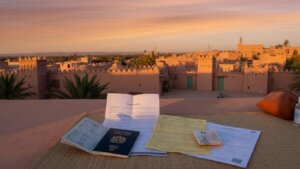
Morocco entry requirements in 2024 are straightforward for most nationalities. Citizens of the European Union, the United States, the United Kingdom, Canada, and Australia do not need a visa in advance and receive a morocco visa on arrival stamp allowing a 90-day stay.
Here is what you need at the border:
- A valid passport with at least six months of validity remaining beyond your travel dates
- A return or onward ticket showing you intend to leave within the permitted period
- Proof of accommodation for at least the first night, such as a hotel confirmation
- Sufficient funds for your stay, which border officers may occasionally ask to verify
If your nationality is not covered by the visa-on-arrival arrangement, you will need to apply in advance through the nearest Moroccan consulate. Always verify current requirements with official sources before you fly, as policies can update.
Health precautions before visiting Morocco
The key health precautions before visiting Morocco involve vaccinations, food and water safety, and preparation for significant temperature swings, particularly if you are heading into the Sahara. No vaccinations are legally required for entry, but several are recommended by travel health clinics.
Speak to your doctor or a travel medicine specialist at least four to six weeks before departure. Standard recommendations include:
- Hepatitis A and Typhoid, given the risk from food and water
- Tetanus and routine vaccinations confirmed up to date
- Rabies vaccination for travelers planning extended rural or desert stays
Tap water in Morocco is not reliably safe to drink for visitors without local immunity. Stick to sealed bottled water, avoid ice in drinks from street vendors, and wash fruit thoroughly. Traveler’s diarrhea is the most common health issue and is easily managed with basic precautions and a well-stocked travel pharmacy kit.
Female traveler safety in North Africa: what to expect in Morocco
Female traveler safety in North Africa is a legitimate concern, and Morocco warrants an honest, practical response rather than dismissal or exaggeration. Solo female travelers visit Morocco every day and navigate it successfully with the right preparation and expectations.
Unwanted attention from men, particularly in busier urban areas, is a reality. It is rarely threatening and is best handled by confident, direct disengagement rather than prolonged conversation. Dressing modestly, especially when traveling to marrakech alone or through smaller towns and rural areas, reduces unsolicited interaction significantly.
Practical steps that make a measurable difference:
- Book your first night’s accommodation in a riad with reliable reviews, so you arrive knowing exactly where you are going
- Share your itinerary with someone at home before you travel
- Use licensed taxis or pre-arranged private transfers rather than unmarked vehicles
- Connect with other solo travelers through your accommodation, many riads actively foster this
Traveling with a private guided tour removes the vast majority of these friction points. A knowledgeable local guide handles navigation, negotiation, and context, so you spend your energy on the experience rather than on managing logistics.
What is the best time of year for a Sahara excursion?
The best time of year for a Sahara excursion is October through April, when daytime temperatures in the desert are warm rather than brutal and evenings are cool to cold. The peak months of July and August push desert temperatures well above 40°C, which makes extended outdoor activity genuinely uncomfortable and potentially unsafe.
March and November offer a particularly good balance: the light is clear, the dunes are less crowded, and the temperature range makes a sunrise camel trek genuinely enjoyable rather than an endurance exercise. If you are planning a Sahara overnight, pack accordingly because desert nights drop sharply even in spring and autumn.
What to pack for a desert trip
Knowing what to pack for a desert trip separates a comfortable experience from a miserable one. Layers are non-negotiable. Here is a practical packing framework:
- A lightweight merino wool or fleece layer for cold desert nights
- A wide-brimmed hat and high-SPF sunscreen for daytime sun exposure
- A cotton or linen scarf that doubles as sun protection and a dust barrier
- Closed-toe shoes or boots for walking in sand, sandals alone are not enough
- A headlamp for navigating camp in the dark
- Sealed bags for electronics and documents to protect against fine sand
Customs and etiquette in moroccan culture
Customs and etiquette in Moroccan culture are rooted in Islamic values and a deep tradition of hospitality. Understanding them before you arrive makes interactions warmer, avoids unintentional offence, and opens doors that remain closed to visitors who treat the country purely as a backdrop.
Greetings matter here. A handshake is standard between men; between mixed genders, wait for the Moroccan person to initiate physical contact rather than assuming. Accepting mint tea when offered is a meaningful gesture, not just a pleasantry. Refusing without reason can come across as dismissive in a culture where hospitality is taken seriously.
During Ramadan, eating, drinking, and smoking in public during daylight hours is inappropriate and inconsiderate. Visiting during this period offers a genuinely different atmosphere, but it requires additional cultural sensitivity from visitors.
Dress codes apply in mosques and religious sites. Non-Muslims cannot enter active mosques in Morocco, with the exception of the Hassan II Mosque in Casablanca. Cover shoulders and knees when visiting any religious or traditional space, regardless of gender.
Why private guided tours make the difference for first-time visitors
Private guided tours for first-time visitors to Morocco are not a luxury add-on; they are the most efficient way to see the country properly without spending half your trip recovering from logistical mistakes. A private guide provides real-time cultural context, handles Arabic and Darija communication, knows which restaurants have never poisoned a tourist, and keeps your itinerary moving without the friction that independent travel in an unfamiliar country often produces.
First-time visitors consistently report that a knowledgeable guide transformed their experience, turning confusing medina alleys into navigable stories, and turning market negotiations from stressful exchanges into something enjoyable. If you are planning your first trip and want a framework that works, this guide to planning your first time in Marrakech will give you a solid starting point before you make any bookings.
Morocco rewards travelers who arrive prepared. The concerns that make people hesitate, whether around safety, entry paperwork, desert logistics, or cultural missteps, are all manageable with the right information. Plan around the season, respect local customs, travel with a trusted operator, and Morocco will give you more than you came looking for.