Understanding Morocco’s geography before you travel
Morocco is bigger than most first-time visitors expect. Marrakech, Fes, Chefchaouen, Merzouga, and Essaouira are all popular destinations, yet each one sits in a completely different part of the country. The Atlas Mountains separate the north from the south. The Sahara stretches across the southeast. The Atlantic coast runs the length of the west. Understanding these distances is the first step to building a realistic itinerary.
A common mistake is underestimating travel times. The drive from Marrakech to Merzouga, for example, takes roughly nine to ten hours by road, passing through dramatic mountain passes and valley towns. The train between Marrakech and Casablanca takes around three hours. Knowing what connects to what, and how long it actually takes, shapes every decision you make about how to get around Morocco.
Morocco train travel: reliable, comfortable, and underrated
The national rail network, operated by ONCF, is one of the most practical ways to move between Morocco’s northern and central cities. Trains run regularly between Casablanca, Rabat, Fes, Tangier, and Marrakech (Marrakech to Tangier distance), with comfortable seating, air conditioning, and reasonable journey times. Morocco train travel is particularly well-suited to solo travellers and couples who want an independent, low-stress experience on certain routes.
The Casablanca to Marrakech line and the Casablanca to Tangier high-speed line (Al Boraq) are the two most-used routes by international visitors. Al Boraq, launched in 2018, connects Casablanca and Tangier in under two and a half hours, making it a genuinely efficient choice for travellers heading to the north. First-class tickets are affordable and worth the small price difference, especially on longer journeys.
The limitation of the train network is that it does not extend to southern destinations. If your itinerary includes the Draa Valley, Merzouga, or the Erg Chebbi dunes, you will need a different solution once you leave the rail corridor.
Morocco bus travel and shared taxis: the local way
For destinations outside the rail network, long-distance buses fill the gap. CTM and Supratours are the two main operators offering clean, air-conditioned coaches that connect cities across the country, including routes that trains do not cover. Booking in advance is strongly recommended during peak travel periods, particularly around national holidays and summer months.
Shared grand taxis are another layer of the local transport system, operating fixed routes between towns and filling up before they depart. They are faster than buses on shorter routes and offer a genuinely local experience, though comfort levels vary. Morocco taxi services in cities like Marrakech and Fes also include petit taxis, small metered cars for getting around within a city. Always ensure the meter is running or agree on a fare before you get in.
What is the easiest way to travel between cities in Morocco?
For most travellers visiting multiple destinations, a private transfer or a hire car with a driver is the most comfortable and flexible option. A private transfer means a professional driver meets you at your hotel, airport, or riad and takes you directly to your next destination, without stops, without confusion, and without the logistics of navigating unfamiliar roads. Morocco private transfers are particularly valuable when travelling with family, handling luggage, or moving between cities that are not connected by rail.
This is especially true on routes like Marrakech to Fes via the Ziz Valley, or Ouarzazate to the desert. These are not routes where the journey is simply a transfer. The landscapes along the way are part of the experience. Having a knowledgeable driver who can point out the Todgha Gorge, suggest a stop at a carpet cooperative in a small Berber village, or explain the history of a ksar you pass through turns travel time into something worth having.
If you are thinking about building an itinerary that combines several of these routes, our Morocco private tours are designed to do exactly that, with a private vehicle, a dedicated driver, and a flexible schedule that moves at your pace.
Renting a car with a driver versus self-driving in Morocco
Self-driving in Morocco is possible, but it comes with real considerations. Road quality varies significantly once you leave the main highways. Mountain routes, desert pistes, and medina streets in older cities require experience and patience. Signage is inconsistent in rural areas, and GPS coverage can be unreliable in parts of the south and the High Atlas. That said, major highways between cities are generally well-maintained and clearly marked.
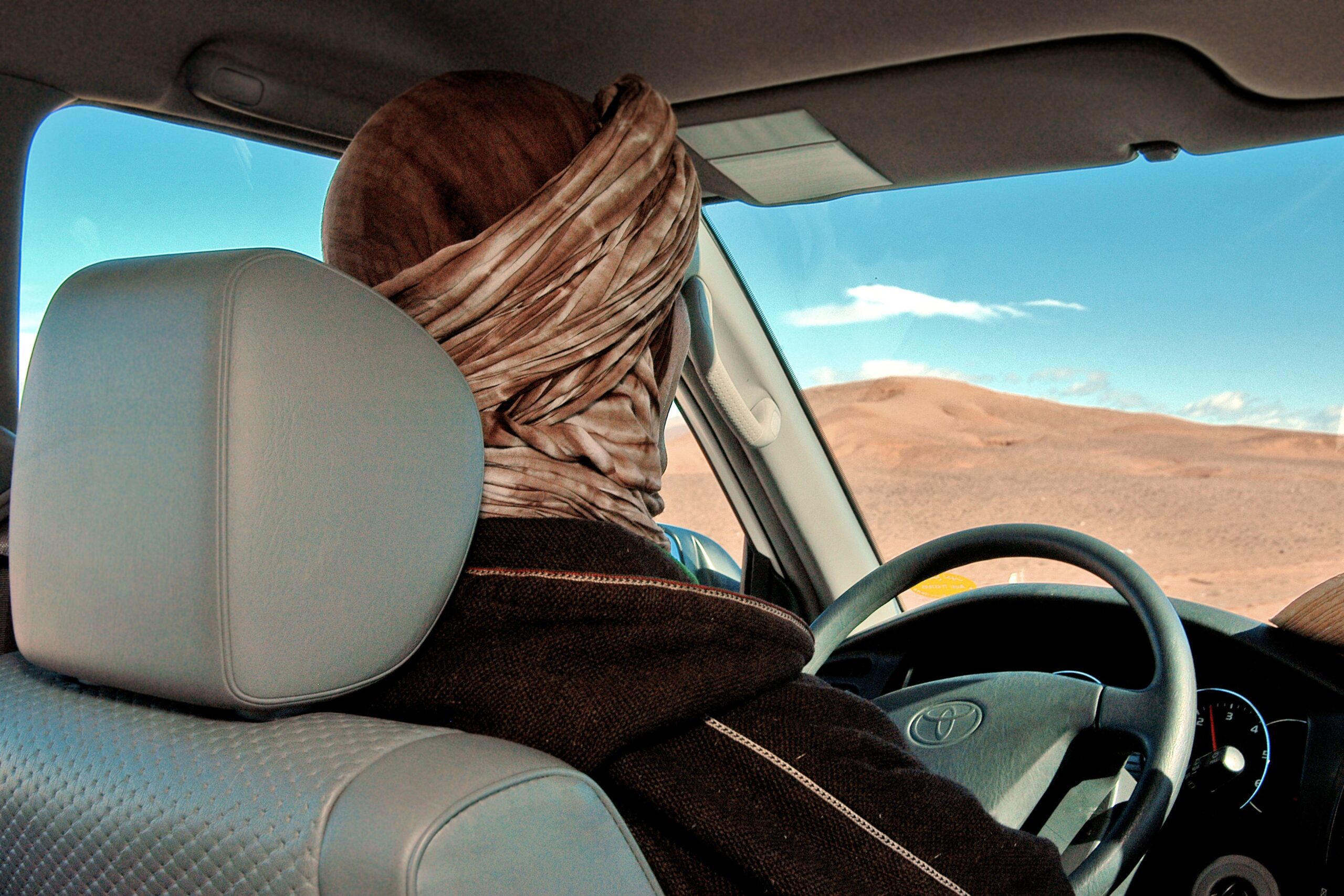
The alternative, and the one most travellers find genuinely rewarding, is to rent a car with a driver in Morocco. This gives you the freedom of a private vehicle without the stress of navigation, parking, or road uncertainty. Your driver handles logistics, you handle the experience. It is a particularly strong option for desert routes, mountain itineraries, and any trip that involves long distances across unfamiliar terrain.
Drivers on these arrangements typically speak English or French, understand tourism itineraries well, and can adapt the day based on your preferences. They know where to stop for lunch without ending up in a tourist trap, and they know which roads to avoid after rain. That local knowledge is hard to overstate.
Morocco airport transfers: getting your trip off to the right start
Arriving at Marrakech Menara, Casablanca Mohammed V, or Fes Saïss airport for the first time can be disorienting. Taxi drivers outside arrivals are often unmetered or willing to negotiate aggressively, and the difference between a legitimate transfer and an overpriced one can be significant. Pre-arranging a Morocco airport transfer through your tour operator or hotel is the most reliable way to start a trip calmly.
A confirmed pickup means a named driver waiting in arrivals with your name on a board, a fixed price agreed in advance, and a direct route to your accommodation. No negotiation, no wrong turns, no uncertainty after a long flight. It is a small detail in the context of an entire trip, but it sets the tone for everything that follows.
Choosing the right transport for your type of trip
The honest answer is that most Morocco itineraries work well with a combination of options. A train from Casablanca to Marrakech on arrival, followed by private transfers for the desert and mountain portions of the trip, followed by a domestic flight home from Fes, is a perfectly logical and comfortable way to see a wide portion of the country in ten to fourteen days.
What matters is matching the transport to the terrain and the pace. The best way to travel Morocco is not one single answer, it depends on where you are going, how long you have, and how much flexibility you want built into each day. City-to-city train travel suits some legs of a journey perfectly. A private vehicle with a driver suits others.
If you are still working out how these pieces fit together for your specific trip, our team at Merry Morocco plans private itineraries from scratch, including all transfers, drivers, and logistics, so that getting around Morocco by car or any other means becomes something you simply experience rather than something you have to manage. Reach out and tell us where you want to go.
Morocco rewards the traveller who arrives prepared. The landscapes are extraordinary, the distances are real, and the quality of your journey between destinations shapes the whole trip. Choose your transport thoughtfully, and the country opens up in ways that a rushed or stressful itinerary never quite allows.