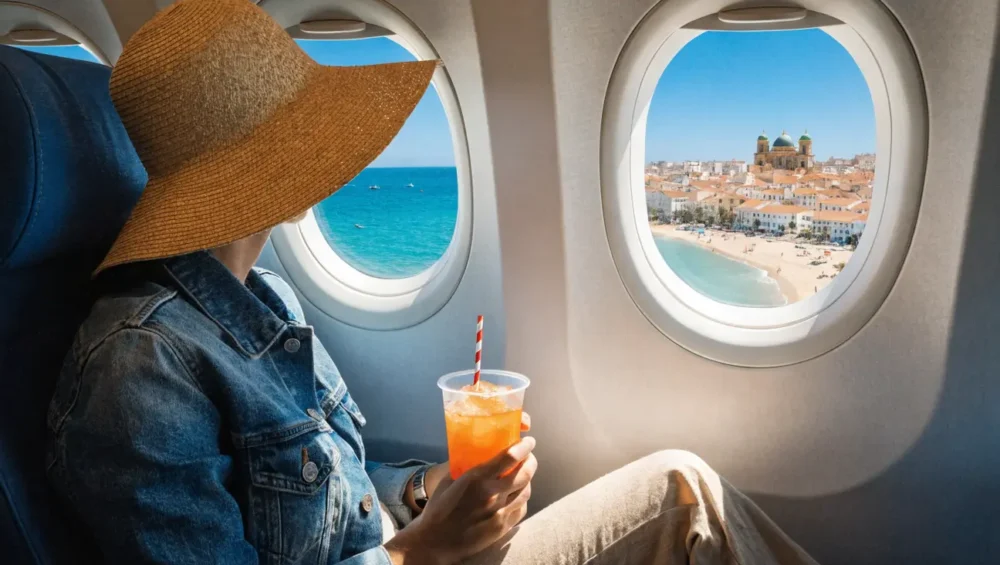
Getting there: flights from the USA to Morocco
Traveling from USA to Morocco is more straightforward than most Americans expect. Several major carriers operate transatlantic routes, with Royal Air Maroc offering the only nonstop service between New York JFK and Casablanca Mohammed V International Airport. The flight takes roughly eight hours, making it one of the shorter transatlantic crossings you can take. From Casablanca, a connecting domestic flight or train brings you to Marrakech, Fez, or any other major city in under two hours.
If you are flying from cities like Los Angeles, Miami, or Chicago, you will likely connect through a European hub such as Paris, Madrid, or Amsterdam before continuing to Morocco. Connecting flights add time but often open up cheaper fares, so it is worth comparing routes before you commit to a specific departure city.
When it comes to USA to Marrakech direct flights, the options are currently limited, but Marrakech Menara Airport does receive some seasonal European connections that Americans can book as part of a multi-leg itinerary. Many travellers find it easier to fly into Casablanca and take the train south to Marrakech, which adds only a few hours and gives you your first glimpse of the Moroccan countryside rolling past the window.
Morocco visa for US citizens: what you need to know
US citizens do not need a visa to enter Morocco for stays of up to 90 days. Your valid American passport is all you need at the border. Passport control at Casablanca and Marrakech airports is generally efficient, and most travellers clear customs within thirty to forty-five minutes of landing.
That said, your passport should be valid for at least six months beyond your planned departure date from Morocco. Border officers may also ask for proof of onward travel or accommodation, so having your return flight confirmation and hotel or riad reservation accessible on your phone is a sensible precaution.
What is the best time to visit Morocco from the USA?
The best time to visit Morocco from the USA depends on what kind of experience you are looking for. Spring, from late March through May, and autumn, from September through November, offer the most comfortable temperatures across the country. Cities like Fez and Marrakech sit inland and can reach intense summer heat, while the Atlantic coast stays more temperate year-round.
If the Sahara Desert is part of your plan, and for many first-time visitors it absolutely should be, avoid July and August when desert temperatures can become extreme. The shoulder seasons offer warm days, cool evenings, and a pace that feels more relaxed. Winter travel is possible and underrated, particularly in Marrakech, where daytime temperatures remain mild and the city’s riads, hammams, and souks feel especially rewarding when the crowds thin out.
How to plan your Morocco itinerary as an American traveller
A Morocco itinerary for Americans planning their first visit typically runs between seven and fourteen days. One week gives you enough time to experience Marrakech properly and add one or two day trips. Two weeks allows you to include the imperial cities of Fez and Meknes, the blue-painted lanes of Chefchaouen, and a night or two in the Sahara near Merzouga or Zagora.
Marrakech is almost always the natural starting point. The city has the country’s strongest international air connections, a wide range of accommodation for every budget, and an energy that pulls you in immediately. From there, the country opens up in every direction.
If you are trying to decide how much time to give the city itself, the detailed breakdown in this Morocco travel guide for Americans covers exactly how to pace your days without rushing or running out of things to see. The medina alone can absorb full days, but having a structure helps you leave feeling satisfied rather than overwhelmed.
For travellers who want to cover more ground without the stress of navigating unfamiliar roads, hiring a private driver is a practical solution that transforms long distances into comfortable, scenic journeys. Morocco’s road network between major cities is well-maintained, but mountain passes and desert routes reward those who have a knowledgeable local behind the wheel.
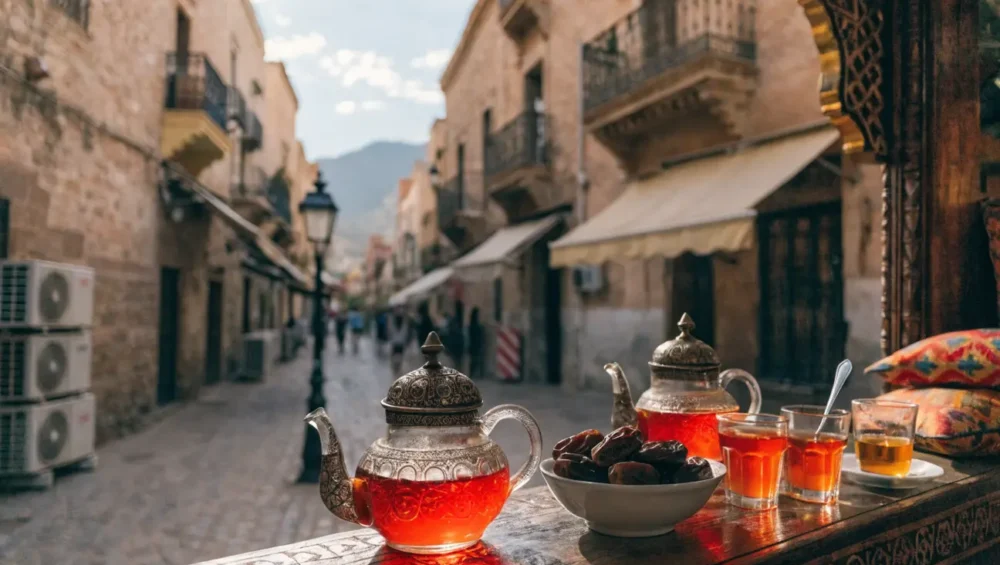
Things to know before visiting Morocco from the USA
There are a few practical realities that make a real difference once you land. Morocco uses the Moroccan dirham, which is not freely convertible outside the country, so plan to exchange currency on arrival. ATMs are widely available in cities and accept major international cards, though rural areas operate primarily on cash.
The language situation is layered but manageable. Arabic and Tamazight are the official languages, French is widely spoken in cities and tourism contexts, and English is increasingly common in Marrakech and other tourist-heavy areas. A few words of French go a long way and are appreciated, even if your French is minimal.
Morocco is a predominantly Muslim country, and while it is genuinely welcoming to international visitors, dressing modestly outside of resort pools and private riads is both respectful and practical. Shoulders and knees covered in medinas and religious sites will make your interactions feel more natural and comfortable.
Getting around once you arrive
First time in Morocco from USA travellers are often surprised by how diverse the country’s transport options are. Trains connect the major northern and central cities reliably. Shared taxis, known as grand taxis, cover intercity routes at low cost. Private transfers and guided excursions fill the gap for destinations that sit off the rail network, particularly the desert, the Atlas Mountains, and the Atlantic coast towns south of Agadir.
Driving yourself is an option, but it is not for everyone. Urban traffic in Marrakech and Casablanca moves according to its own logic, and the mountain roads south into the Draa Valley require confidence behind the wheel. Many Americans who start out planning to self-drive end up preferring a private driver once they research the roads more carefully.
Money, tipping, and negotiating in the souks
Morocco travel tips for Americans often underestimate the importance of understanding the local economy of the medina. Prices in the souks are rarely fixed, and light negotiation is genuinely expected in market stalls selling crafts, leather goods, and textiles. This is not aggressive haggling but rather a natural back-and-forth that forms part of the social contract in traditional markets.
Tipping is standard in Morocco. Guides, drivers, riad staff, and restaurant servers all appreciate a small addition to the bill. Having a supply of smaller dirham notes on hand makes this easier throughout your trip.
Why first-time visitors from the USA keep coming back
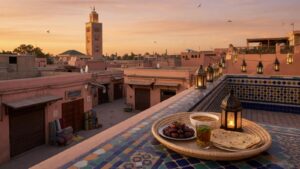
USA to Morocco flight tips can get you as far as the airport, but what keeps people returning is harder to quantify. It is the quality of the light in the late afternoon over the Atlas foothills. It is a dinner of slow-cooked lamb tagine eaten on a rooftop while the city cools around you. It is the feeling, common among first-time visitors, that the country gave them more than they thought to ask for.
Morocco sits only a short flight east of Western Europe and roughly eight hours from the American east coast, yet it feels genuinely distant from both in the best possible sense. The architecture is different. The food is different. The rhythm of daily life is different. And yet the country has hosted international visitors for generations and knows how to make newcomers feel welcomed rather than lost.
If you are ready to move from researching to planning, the team at Merry Morocco specialises in Morocco itinerary for Americans who want a private, well-organised experience without losing the sense of discovery that makes travel meaningful. Whether you want three days in Marrakech or a two-week circuit of the imperial cities and the Sahara, a private tour built around your pace and interests is the difference between a trip you enjoyed and one you remember for years.
Your first trip from the USA to Morocco does not need to be complicated. With the right groundwork and a little guidance, it can be exactly what you hoped it would be.