Weather in Morocco in July runs hotter than most first-time visitors expect. Planning a trip around Morocco July temperatures takes a little more thought than most months, but the reward is a country that feels entirely different from its peak-season self. Fewer crowds, lower prices, golden light that lingers until nine in the evening, and a pace of travel that invites you to slow down. This article will tell you exactly what to expect from the heat, which regions stay comfortable, and how to move through Morocco in July without spending your holiday hiding in air conditioning.
What are Morocco july temperatures actually like?
Morocco in July spans an enormous range of climates, from coastal breezes below 25°C to inland heat that regularly exceeds 40°C. The country is not one single climate zone, and that difference matters enormously when you are planning where to go.
Marrakech sits in the pre-Saharan interior, where July daytime temperatures routinely reach 38°C to 42°C, sometimes higher during a heat surge from the south. The city does not cool down quickly at night either, with evenings often staying above 25°C. If you have never experienced dry desert heat, Marrakech in July will surprise you with its intensity.
Fes follows a similar pattern. The medina, with its narrow streets and dense stone architecture, traps heat in a way that can make afternoon walks genuinely uncomfortable. Rabat and Casablanca, sitting on the Atlantic coast, stay considerably cooler, with July averages of around 24°C to 28°C and reliable afternoon wind.
The takeaway: where you travel in Morocco in July determines your entire experience. The country rewards those who plan around the climate rather than ignore it.
Sahara desert heat in summer: should you go?
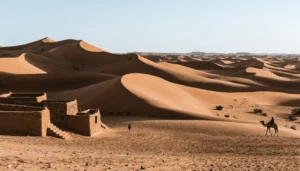
The Sahara desert heat in summer is real, extreme, and not suitable for everyone. Daytime temperatures in Merzouga and the Erg Chebbi dunes regularly reach 45°C in July, with sand temperatures significantly higher.
That said, a carefully structured desert experience is still possible if you travel with an operator who knows how to time it. Arriving in the late afternoon, spending the night in a luxury desert camp, watching sunrise from the dunes before 6am, and departing before the heat builds fully is a model that experienced guides use throughout July. You experience the full drama of the Sahara without enduring the punishing midday hours.
Do not attempt a self-guided desert trip in July without air-conditioned transport and confirmed accommodation. The distances are long, the heat is unforgiving, and the margin for error is narrow.
Best regions to visit in Morocco in summer
The best regions to visit in Morocco in summer are those where geography provides natural relief: the Atlantic coast, the Rif Mountains, and the higher elevations of the Atlas range.
The Atlantic coast
Moroccan coastal towns in July benefit from the Canary Current, a cold Atlantic current that keeps temperatures remarkably moderate. Essaouira is the standout example. The wind season in summer makes Essaouira one of the windiest towns on the Moroccan coast, which translates to a July that feels entirely different from inland cities. Temperatures hover between 20°C and 24°C, with a consistent northerly wind that locals call the alizé. It is a working port town with a well-preserved medina, excellent seafood, and a surf culture that draws visitors from across Europe throughout summer.
Agadir offers a similar coastal escape with a broader beach and more resort infrastructure. Asilah, just south of Tangier, is another Atlantic town that stays cool and draws Moroccan families in July for its whitewashed walls and calm sea.
Atlas mountains climate in july
The Atlas Mountains climate in July provides a genuine contrast to the lowland heat. In the High Atlas, towns like Imlil and Ouirgane sit above 1,700 metres and reach daytime highs of around 28°C to 32°C, with nights that can drop to 15°C or lower at altitude. Trekking in the Atlas in July is highly feasible, with dry trails, clear skies, and long daylight hours working in your favour. The Toubkal region, home to North Africa’s highest peak at 4,167 metres, sees some of its most accessible conditions in summer.
The rif mountains and Chefchaouen
Chefchaouen, sitting at around 600 metres in the Rif Mountains, stays noticeably cooler than the plains. July there is warm but manageable, with temperatures in the low to mid-30s and evenings that cool pleasantly. It is one of the few places in Morocco where you can walk the streets comfortably after 3pm without feeling drained.
Is july a good time to travel Morocco?
July is a good time to travel Morocco if you plan your itinerary around climate rather than convention. It is not the easiest month, but it is far from impossible, and it comes with genuine advantages.
- Tourist numbers in interior cities like Marrakech and Fes drop compared to spring, meaning shorter queues and more available accommodation.
- The Atlantic coast and mountain regions are at their liveliest, with Moroccan families and European visitors choosing these areas specifically for summer.
- Prices for riads and private tours in inland cities are often lower in July than in March or October.
- Light quality in summer Morocco is extraordinary for photography, particularly in the golden hour before sunset.
The visitors who struggle in July are those who replicate a spring itinerary without accounting for the heat. Those who adapt, by shifting to coastal or mountain regions, planning early starts, and resting midday, have a rich and memorable experience.
Marrakech in july: practical advice for the heat
Marrakech heatwave travel advice comes down to one principle: work with the rhythm of the city, not against it. Marrakech has dealt with extreme summer heat for centuries, and its architecture and daily schedule reflect that.
The souks and major monuments like the Bahia Palace and Saadian Tombs are best visited before 10am or after 5pm. Midday hours from roughly noon to 4pm should be treated as rest time, either in your riad or in a shaded café. Many of the city’s finest riads have internal courtyards and plunge pools designed precisely for this purpose.
Hydration is non-negotiable. Carry water everywhere, drink more than you think you need, and seek out freshly pressed orange juice from the stalls along Jemaa el-Fna, which are open from early morning.
Morocco packing list for hot weather
A Morocco packing list for hot weather should prioritise protection and breathability over minimalism. The desert and mountain terrain also mean you need layers for evening and altitude.
- Loose linen or cotton clothing in light colours that covers shoulders and knees, both for sun protection and for respecting dress codes in medinas and mosques.
- A high-SPF sunscreen and a wide-brimmed hat, non-negotiable for any outdoor sightseeing.
- A lightweight scarf or shawl that doubles as a cover-up and as protection from dust on desert or mountain roads.
- A reusable water bottle, ideally insulated, that you can refill throughout the day.
- Comfortable walking sandals with support for uneven medina streets, alongside a pair of closed shoes for mountain walks.
- A light fleece or layer for Atlas Mountain evenings and desert nights, which can be surprisingly cold compared to the daytime.
Planning a private tour Morocco summer itinerary
A private tour Morocco summer itinerary works when it is built specifically around July conditions. A good summer route typically opens in Marrakech for two nights with early-morning sightseeing, travels up into the Atlas Mountains for a day or two of trekking or valley exploration, continues south for a Sahara overnight with careful timing, and finishes with several days on the Atlantic coast in Essaouira or Agadir.
Private touring in summer gives you control over timing that group tours cannot offer. You leave for the desert at the hour that makes sense climatically, you stop at the riad with the courtyard pool, and your guide adjusts the pace if the heat requires it. If you are curious about what a summer journey through Morocco can include, exploring the best things to do in Morocco is a good place to start building your own picture of what the country offers across its different regions.
Morocco in July rewards travellers who arrive informed and stay flexible. The heat is real, the coastal wind is a genuine gift, and the mountains offer a Morocco that many summer visitors never find. Whether you are drawn to the Sahara at sunrise, the medinas in the cool of the early morning, or the Atlantic breeze in Essaouira, the country has a version of July that works for almost every kind of traveller. For those who want to move through it all seamlessly, it is worth considering whether renting a car in Morocco gives you the freedom to follow the climate rather than a fixed timetable.