The Experiences That Define a Morocco Trip
Morocco sits at a crossroads — literally. Africa to the south, Europe just 14 kilometers across the Strait of Gibraltar to the north, and centuries of Berber, Arab, Andalusian, and French influence layered into every street, dish, and craft tradition. That context matters because it explains why Morocco’s best things to do in Morocco span such an extraordinary range: you can ride a camel at sunrise over the Sahara dunes and, thirty-six hours later, stand inside a 9th-century madrasa in Fes that feels completely untouched by time.
Start in Marrakech. Almost every itinerary does, and for good reason — it’s the country’s most logistically convenient entry point and an experience in itself. The medina of Marrakech is a UNESCO World Heritage Site, and walking through Derb Dabachi or the spice souk near Rahba Kedima is not the kind of thing you can replicate anywhere else on earth. The colors are loud, the smells are layered, and the noise is constant — but there’s a rhythm to it that, once you feel it, makes sense. Give yourself at least two full days here before you rush anywhere else.
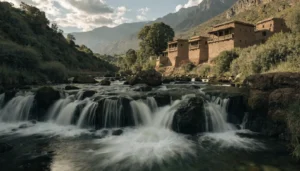
From Marrakech, the Atlas Mountains are only about an hour’s drive east. The Ourika Valley runs along a river fed by snowmelt from peaks that reach over 4,000 meters at Jebel Toubkal — the highest point in North Africa. We take travelers through small Berber villages along this route regularly, and the thing that strikes people most isn’t the scenery, it’s the hospitality. Stopping for mint tea with a family in Setti Fatma or Aït Benhaddou is not a tourist performance. It’s just what people do here.
What Is Morocco Best Known For as a Travel Destination?
Morocco is best known for its ancient imperial cities, Sahara desert experiences, and distinctive cuisine — but the reality is richer than any single category. The country’s appeal comes from the density of contrasting experiences packed into a relatively compact geography. You can drive from the Atlantic coast to the edge of the Sahara in under eight hours. That physical variety — coast, mountains, desert, medina cities — is what makes Morocco travel experiences unlike anywhere else.
The four imperial cities — Marrakech, Fes, Rabat, and Meknes — form the historical backbone of the country. Each ruled as a capital at different points in Moroccan history, and each carries a distinct personality. Fes el-Bali, the old medina of Fes, is arguably the world’s largest living medieval city, with roughly 9,000 streets in its labyrinthine core. Rabat, the current capital, moves at a slower, more European pace. Meknes has one of the most dramatic gates in North Africa — Bab Mansour — and a fraction of the tourist crowds. These cities are not interchangeable, and if your schedule allows only one, choose based on what kind of energy you want, not just what’s closest.
Desert Nights and Sahara Dunes: Why This Is Still the Top Bucket List Experience
The Sahara camp experience near Merzouga — specifically the Erg Chebbi dunes, which rise to about 150 meters at their tallest — remains the single most requested experience among travelers we host at Merry Morocco. The drive from Marrakech takes around nine to ten hours through the Draa Valley and the Dadès Gorge, which is a journey worth taking slowly rather than rushing. Most travelers do this as part of a multi-day circuit, spending nights in Boumalne Dadès or Tinghir along the way.
Arriving at Erg Chebbi in the late afternoon, when the light goes orange and the shadows stretch long across the dunes, is the kind of moment people describe years later. Camel rides at that hour are genuinely magical — not in a staged-photo way, but in the quiet, slightly surreal sense of moving across a landscape that feels ancient and indifferent. The cold hits fast after sunset, even in spring, so pack a layer you’re not expecting to need. Temperatures at Merzouga in April can swing from 28°C in the afternoon to under 10°C by midnight.
Staying in a desert camp means falling asleep to near-total silence and waking for the sunrise before the heat builds. Our drivers who cover this route regularly will tell you: skip the large, over-lit camps near the road and ask to be taken to a smaller setup further into the dunes. The extra twenty minutes of walking or camel riding makes an enormous difference to the experience.
For travelers pressed for time, Merry Morocco offers desert excursions and Morocco excursions and day trips that cover the key desert highlights efficiently, with private transport so you’re never waiting on a group schedule.
What Are the Most Unique Things to Do in Morocco Beyond the Obvious?
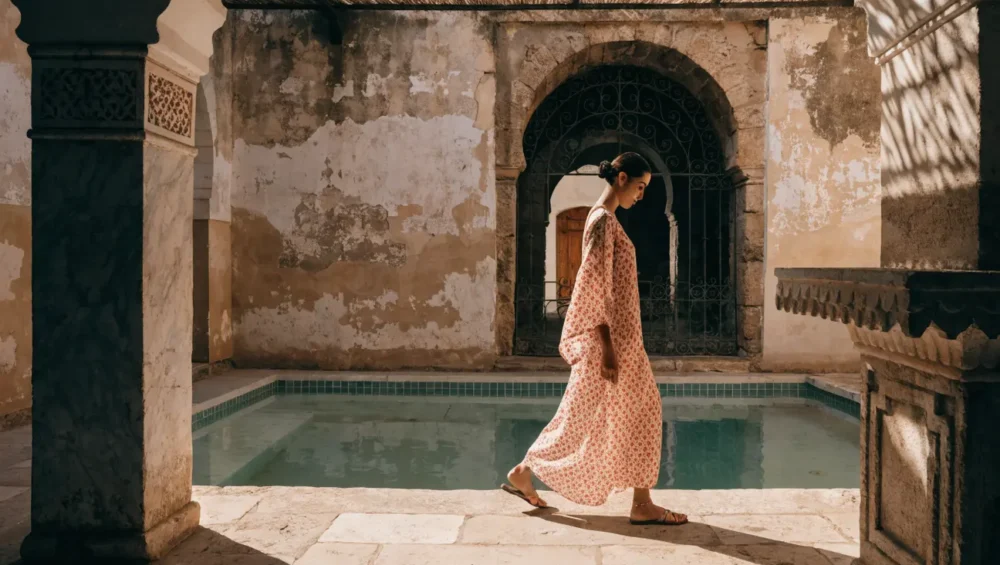
The most unique things to do in Morocco are the ones that take you slightly off the main tourist circuit — not into obscurity, but into the kind of authentic texture that most itineraries skip. Visiting a traditional hammam, for example, is something travelers often debate and then never do — which is a shame. A neighborhood hammam (not a spa-hotel version) costs a few dirhams, involves a serious exfoliation with a kessa mitt, and leaves you feeling like a new person. It’s a deeply local ritual, and it’s entirely accessible to visitors who simply ask their riad host to recommend one nearby.
The coastal town of Essaouira is another experience that deserves more attention than it gets. About three hours west of Marrakech along the Atlantic coast, Essaouira has a completely different character — windswept, blue-and-white, more relaxed, with a strong Gnawa music tradition that surfaces in small cafés and evening performances. The medina here is compact and genuinely easy to navigate, which is a relief after Marrakech’s maze. The seafood at the port grills is exceptional and costs almost nothing.
Chefchaouen, the blue city in the Rif Mountains, photographs beautifully and earns its reputation — but arriving early in the morning, before the day-trippers come up from Fes or Tangier, is what separates a genuine experience from a crowded one. The hike up to the Spanish mosque above town takes about thirty minutes and gives you a perspective on the city that no street-level photo can capture.
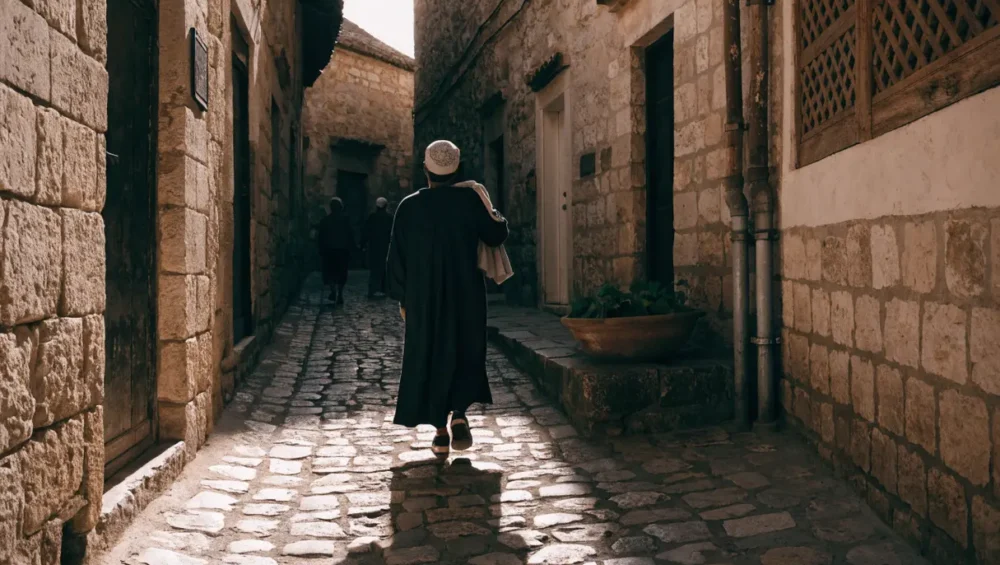
For travelers interested in craft traditions, Fes is the place to understand Moroccan artisanship at its most complex. The tanneries — Chouara is the largest and most visited — are best seen from the leather shops above, which provide free viewings. Watching the workers dye hides in stone vats using methods that haven’t changed significantly in centuries is genuinely arresting. Less visited but equally rewarding: the zellige tilework workshops in the Fes medina, where a single panel of geometric mosaic might represent weeks of hand-cutting work.
How Should You Structure a Morocco Itinerary to See the Most?
The best Morocco itinerary depends entirely on how many days you have — but the most common mistake is treating Morocco like a city-hopping trip in Europe. Distances here are real: Marrakech to Merzouga is roughly 560 km, Fes to Chefchaouen is about 200 km on mountain roads that take longer than a map suggests. Building in travel time isn’t just practical; the drives through the Atlas, the Draa Valley, and the Ziz Gorge are experiences in themselves.
For ten days, a well-designed route might look like this: two nights in Marrakech, a day in the Ourika Valley or Ait Benhaddou, two nights along the desert circuit through Boumalne and Merzouga, one night in the Sahara, then north through Erfoud and Midelt to Fes for two nights, finishing with a night in Chefchaouen before flying from Tangier or returning south. This covers the major pillars — imperial city, mountain, desert, coast-adjacent — without feeling rushed.
We at Merry Morocco, based in Marrakech, design exactly these kinds of tailor-made private circuits, with a driver who knows the roads, knows when to stop, and knows which roadside argan cooperative is genuine versus which one is a performance for tourists. That knowledge is not something a rental car or a bus tour can replicate.
Planning Your Trip: Practical Advice Worth Keeping
The best time to travel is generally March through May and September through November — temperatures are manageable across all regions, the light is good, and the desert is neither scorching nor cold enough to interrupt the experience. July and August in Marrakech regularly hit 40°C or above, which makes afternoon sightseeing genuinely unpleasant. December through February is beautiful in terms of crowds and light, but the desert nights are cold and the Atlas passes can close with snow.
Budget-wise, Morocco can be done affordably or luxuriously — the range of riads, camps, and restaurants is wide. What’s not variable is the cost of private transport, which is consistently one of the best investments you can make. Shared transport between cities is possible but slow, and taxis in medinas are a daily negotiation. A private driver removes friction from every part of the trip, which is why it’s the service we most consistently recommend to first-time visitors.
One detail only someone who’s done this route repeatedly would flag: the road between Boumalne Dadès and Tinghir passes through the Todra Gorge, where vertical rock walls rise to roughly 300 meters on either side of a narrow river. Most GPS routes skip it in favor of the faster main road. Don’t skip it. It adds forty minutes and changes the entire texture of the day.
If you’re ready to stop researching and start planning, Merry Morocco offers private tours, desert excursions, and fully customized itineraries built around how you actually want to travel — not how a group tour needs to move. Reach out to the team in Marrakech and tell us what you want to feel on this trip. The itinerary follows from there.
Morocco rewards travelers who go in with curiosity and flexibility. The best moments — a spontaneous tea invitation, a sunrise over dunes you have entirely to yourself, a corner of Fes that no one else seems to have found — aren’t on any list. They happen when you’re moving well, unhurried, with someone who knows the country and genuinely wants you to love it.