A Morocco local tour looks nothing like the big-bus itinerary most people picture. Most people arrive in Morocco with a loose idea of what they want: a camel at sunset, a plate of tagine, the smell of spices in a narrow alley. What they rarely expect is how quickly a private guided excursion Morocco strips away the rehearsed version of the country and replaces it with something far more honest. This article walks you through what a local tour here actually feels like, from the moment your driver pulls up outside your riad to the night you fall asleep under a sky full of desert stars.
Why a private guided excursion Morocco changes how you see the country
A private guided excursion in Morocco gives you direct access to people, places, and rhythms that group tourism simply cannot reach. The difference is not just logistical. It is perceptual.
When you travel with a local guide rather than following a tour bus route, the pace shifts. You stop because you want to stop. You eat where the guide eats, not where the commission points. Your driver knows which road washed out last winter and which village is holding a weekly souk that no travel site has listed. That kind of knowledge is not found in a guidebook. It lives in the person sitting next to you in the front seat.
The authentic Moroccan experience begins before the sights do. It begins in conversation, in the unhurried way a guide explains why a particular mosaic pattern appears on a 14th-century fountain in Fes, or why the argan cooperative outside Essaouira is run entirely by women from a single tribe. These details land differently when someone who grew up here tells them to you.
Travellers who book a Marrakech day trip with driver often describe a quiet surprise: the city they thought they knew from photos becomes three-dimensional. The noise has texture. The silences have meaning. You start to read the place rather than just photograph it.
What to see in the Atlas mountains on a day trip from Marrakech
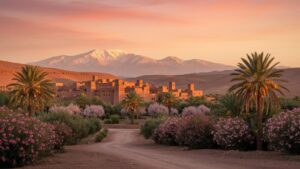
The Atlas Mountains are accessible from Marrakech in under two hours, and a single day in the range can shift your entire understanding of Moroccan geography and Berber culture. The most rewarding entry point is the village of Imlil, which sits at around 1,740 metres and serves as a trailhead into deeper mountain terrain.
For travellers wondering what to see in the Atlas Mountains, the answer depends on how far you want to go. A short walk from Imlil leads through walnut orchards and terraced barley fields to the village of Aremd. A longer route climbs toward the Toubkal basecamp. Even staying in the valley, you are surrounded by kasbahs, mule tracks, and the kind of mountain quiet that feels earned.
Local guides in the Atlas are usually Amazigh, and many speak Tachelhit, Arabic, French, and enough English to explain things with precision and warmth. Hiring a local guide here is not a formality. It is how the mountains make sense. The landscape is complex, the trails are unmarked in places, and the cultural context adds layers that geography alone cannot provide.
If the Atlas is on your itinerary, Imlil as a gateway to the Atlas Mountains gives you a detailed look at how to structure a day or overnight visit from Marrakech, including what to expect from the drive and the trails.
How to avoid tourist traps in Morocco without missing anything
Avoiding tourist traps in Morocco is straightforward when you travel with someone who knows the difference between a place that exists for visitors and a place that exists for life. The traps are not malicious. They are structural.
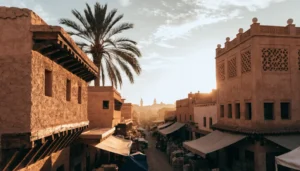
High-traffic areas like Jemaa el-Fna, the tanneries in Fes, and the entrance to major souks attract a layer of commercial pressure that can make first-time visitors feel overwhelmed or misled. The solution is not to avoid these places. It is to approach them correctly.
- Enter the Chouara Tannery in Fes through a leather shop that gives you an elevated view, not through the street entrance where you lose all perspective.
- Visit Jemaa el-Fna in the late afternoon when the square is transitioning, not at peak tourist noon.
- For a souks and medina walking tour, ask your guide to start from a residential quarter and work inward. You will understand the logic of the medina before the commerce begins.
- If you want to hire a local guide in Fes, book through a registered operator rather than accepting an offer at the city gate. Fes is one of the world’s largest living medieval cities, and a guide who knows its 9,000 streets is not a luxury. It is a practical necessity.
Customised travel planning in Marrakech means your guide can anticipate these friction points before you encounter them. The difference between a frustrating afternoon in a souk and a genuinely absorbing one is often a single piece of timing advice.
What does the Sahara overnight camp experience feel like?
A Sahara overnight camp itinerary typically involves a two-day journey from Marrakech through the Draa Valley, arriving at the dunes of Erg Chebbi near Merzouga in the late afternoon. The camel ride into the dunes takes about forty-five minutes and deposits you at a semi-permanent camp as the light drops orange and then purple behind the ridge.
A small group desert trip here feels nothing like a festival campsite. The camps used by serious operators are quiet, well-spaced, and designed to let the desert dominate. Dinner is served under an open sky. The guides play music. The stars, at this distance from any city, are so numerous they change the geometry of the sky.
What surprises most people is the silence before dawn. The desert at 5am, before the wind picks up and before the other camps have stirred, is genuinely one of the quieter places on earth. The Sahara overnight camp itinerary is not just a photo opportunity. It is a recalibration.
For a granular account of what that night actually involves, including what to pack and what the camp conditions are like, the article on what a night in the Sahara desert actually feels like covers every hour from arrival to sunrise.
How to plan an authentic moroccan experience from start to finish
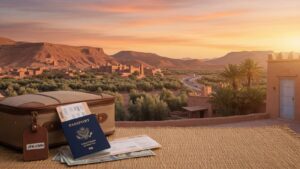
Planning an authentic Moroccan experience works when the itinerary is built around your pace, not a fixed template. Morocco rewards slow travel and penalises rush. A week that tries to cover Marrakech, the Atlas, Fes, the coast, and the Sahara will produce exhaustion and surface impressions. The same week focused on three or four places produces something closer to genuine understanding.
The most effective approach to customised travel planning Marrakech starts with a conversation about what you want to feel, not just what you want to see. That distinction shapes everything: the accommodation, the pace, the mix of guided and free time, and the people you meet along the way.
A few principles that experienced travellers apply:
- Build in at least one full day with no planned activity. Morocco generates its own itinerary if you let it.
- Combine a Marrakech day trip with driver to the Atlas with a longer overnight in a mountain village. The contrast between city and altitude is part of the experience.
- If Fes is on the route, allocate two full days. One day in the medina is a photograph. Two days is a beginning.
- For the Sahara, three days minimum gives you arrival, the full desert night, and a relaxed return without a punishing overnight drive.
Morocco is not a country that reveals itself to the impatient. But it rewards the traveller who arrives prepared to be surprised, guided, and occasionally completely wrong about what they thought they knew. That is where the real journey begins, and it is what a well-planned private guided excursion Morocco is designed to deliver.
If the desert is calling you, start with the detail that matters most: understanding exactly what waits on the other side of those dunes. Read about a night in the Sahara desert and let that be the anchor around which the rest of your Moroccan itinerary takes shape.