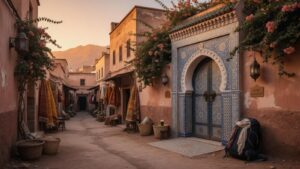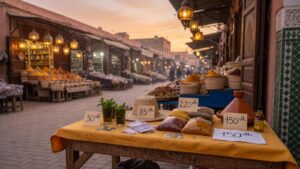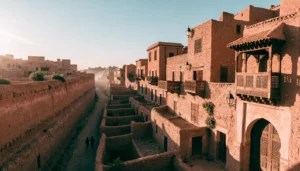
Most Americans who start researching a Morocco trip end up more confused than when they began. Visa rules, flight options, safety concerns, and itinerary decisions all land at once. This guide cuts through the noise and gives you a clear, practical foundation for Morocco travel from USA, covering everything from passport requirements to how many days you actually need on the ground.
What us citizens need to know before booking flights from united states to Marrakech
Americans traveling to Morocco benefit from one of the simplest entry arrangements in North Africa. Morocco visa on arrival for US citizens is not required, meaning you enter on your standard US passport for stays of up to 90 days, with no advance visa application needed.
That said, us passport requirements for morocco do include one important detail: your passport must be valid for at least six months beyond your intended departure date. Border officers enforce this consistently, and airlines will refuse boarding if your document falls short.
A few additional things to sort before you fly:
- Register your trip with the US State Department’s Smart Traveler Enrollment Program (STEP) so the nearest embassy can reach you in an emergency.
- Confirm your travel insurance covers medical evacuation, not just trip cancellation.
- Carry a small amount of Moroccan dirham in cash for your first hours in the country, as airport ATMs can run dry during peak arrivals.
- Download an offline map of Marrakech or whichever city you land in, since SIM cards take time to sort on arrival.
How long are flights from united states to Marrakech?
Direct flights from united states to marrakech currently operate from New York JFK via Royal Air Maroc, with a flight time of roughly 7 to 8 hours. Travelers departing from other US cities typically connect through European hubs such as Casablanca, Madrid, Paris, or London, pushing total travel time to between 12 and 18 hours depending on the layover.
The non-stop option from New York is the fastest route available to Americans, and it lands at Marrakech Menara Airport, which sits just a few kilometres from the medina. For a deeper look at what to expect in the air and on arrival, the guide on flights to Morocco and what the journey involves covers the key details by departure city.
Booking early matters more than most travelers expect. Seats on the direct JFK route sell quickly, particularly in spring and autumn. If you have flexibility, positioning yourself in Europe for a short stop before flying into Morocco can also reduce fatigue and give you a smoother start to the trip.
Is Morocco safe for american travelers?
Morocco is safe for american travelers, and the country welcomes millions of international visitors each year including a significant number from the United States. The US State Department currently lists Morocco at Level 1, its lowest advisory level, meaning standard travel precautions apply.
Like any destination, certain habits make the experience smoother and more comfortable:
- Keep copies of your passport and insurance documents stored separately from the originals.
- Use licensed taxis or pre-arranged transfers rather than accepting unsolicited rides.
- Dress modestly when visiting religious sites and smaller towns outside the main tourist centres.
- Avoid displaying expensive electronics or jewellery in crowded market areas.
- Confirm any guide’s credentials before entering medinas, particularly in Fes and Marrakech.
Traveling with a reputable private operator reduces most of the friction that solo travelers encounter. Navigating unfamiliar cities, finding reliable local experiences, and managing logistics across multiple destinations is genuinely easier when someone on the ground handles the details.
What is the best time of year to visit Morocco?
The best time of year to visit morocco for most Americans is spring, between late March and May, or autumn, between September and November. During these months, temperatures across Marrakech, the Atlas Mountains, and the Sahara are comfortable for both sightseeing and desert travel, ranging from around 18°C to 28°C in the daytime.
Summer in Morocco is genuinely hot. Marrakech regularly exceeds 40°C in July and August, which makes extended time outdoors uncomfortable and can limit what you can do in a day. The Sahara becomes particularly demanding in midsummer heat.
Winter travel, from December through February, is worth considering if you want fewer crowds and lower prices. Marrakech stays mild in winter, though mountain routes can close due to snow and the desert nights drop sharply in temperature. For a more detailed seasonal breakdown, this guide on when to visit Morocco walks through each period by traveler type and preference.
How long to spend in Morocco and what a two-week itinerary looks like
How long to spend in morocco depends on how many regions you want to cover, but two weeks is the sweet spot for most American visitors. It gives you enough time to move between major destinations without the trip feeling rushed, and it allows for genuine rest alongside the travel days.
A solid morocco itinerary two weeks typically follows this structure:
- Days 1 to 3: Marrakech. Arrive, recover from the flight, and explore the medina, the Saadian Tombs, and the Majorelle Garden at a relaxed pace.
- Days 4 to 5: Atlas Mountains. Drive through the Tizi n’Tichka pass and spend a night in a village guesthouse before continuing south.
- Days 6 to 8: Sahara Desert. A sahara desert excursion from marrakech through the Draa Valley to Merzouga allows for a camel ride at sunset, a night in a desert camp, and a dawn start back across the dunes.
- Days 9 to 10: Fes. Drive or fly north and spend two full days in the medina of Fes, the oldest continuously inhabited city in Morocco.
- Days 11 to 12: Chefchaouen. The blue-painted mountain town in the Rif requires at least a day and a half to walk properly and photograph without crowds.
- Days 13 to 14: Casablanca or return to Marrakech. Depending on your outbound flight, wrap up in Casablanca for a final night or return south.
A ten-day version of this route is possible but requires cutting either the north or the desert, and most travelers who do so regret removing the Sahara section.
Why private guided tours in Morocco make a measurable difference
Private guided tours morocco are not a luxury reserved for a particular type of traveler. They are simply the most efficient way to see more, understand more, and stress less across a country where language, navigation, and local knowledge all play a significant role in the quality of your experience.
Morocco’s road network between major cities is good, but knowing which riads are worth the price, which routes through a medina are safe after dark, and which local guides speak accurate English requires either prior experience or a reliable operator. A private tour builds that knowledge in from the start.
For Americans visiting Morocco for the first time, a guided private itinerary also provides accountability. Your guide meets you at the airport, manages the pacing of the trip, handles any logistics that shift, and gives you cultural context that turns sightseeing into something closer to real understanding.
Morocco rewards preparation. The Americans who arrive having sorted their passport validity, booked a realistic itinerary, and chosen a trusted operator consistently leave with a richer experience than those who wing it. If you are ready to start planning properly, explore the right season to travel and how it shapes your itinerary as your next step.